AAnderson AteufackGoogle★★★★★
“The roller mechanism on our existing net broke. They replaced it with a new upgraded system that rolls smoother and locks in place better. Much better than the original.”
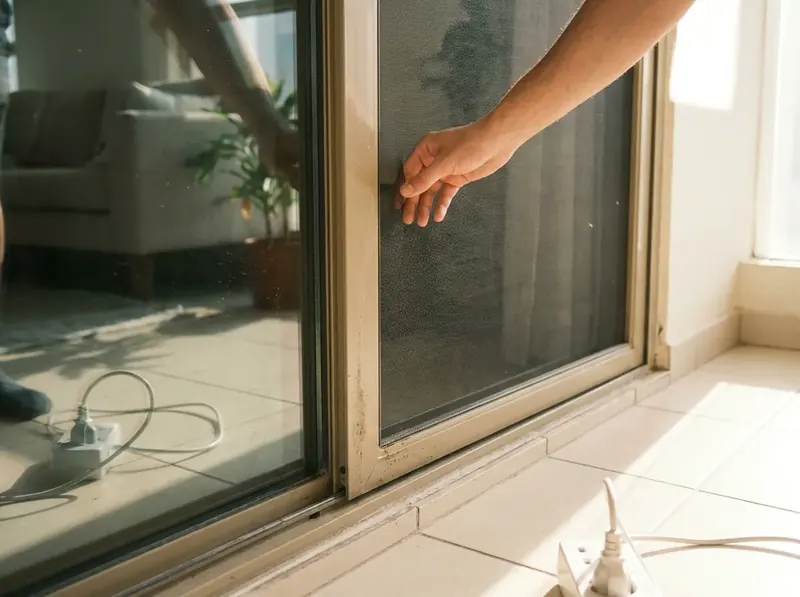
Most often it is sand in the bottom track or grit on the magnetic catch. Vacuum the track, wipe the magnets and close the screen slowly. A pleated screen that closes crooked needs its cords reset, a roller that springs back needs its catch or spring checked, and a screen door that stays open needs its closer adjusted.
 Andrei Moroz · Head of installation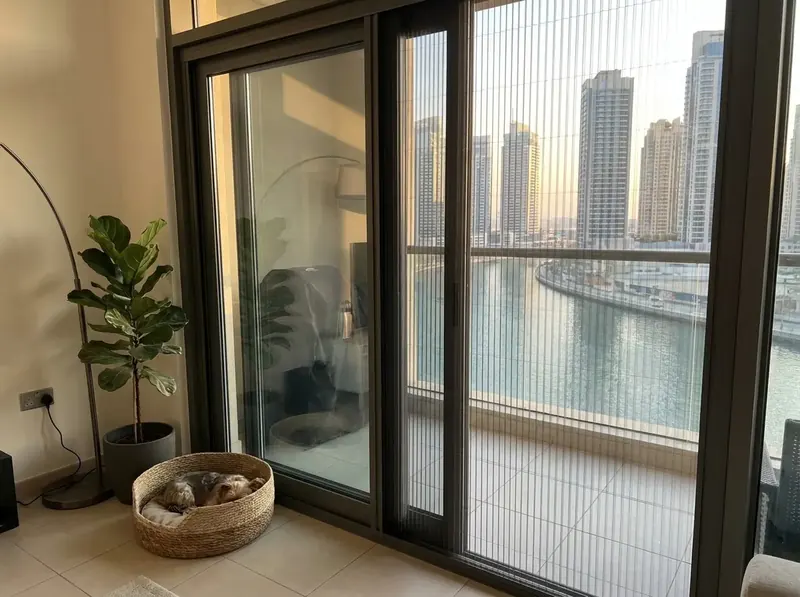

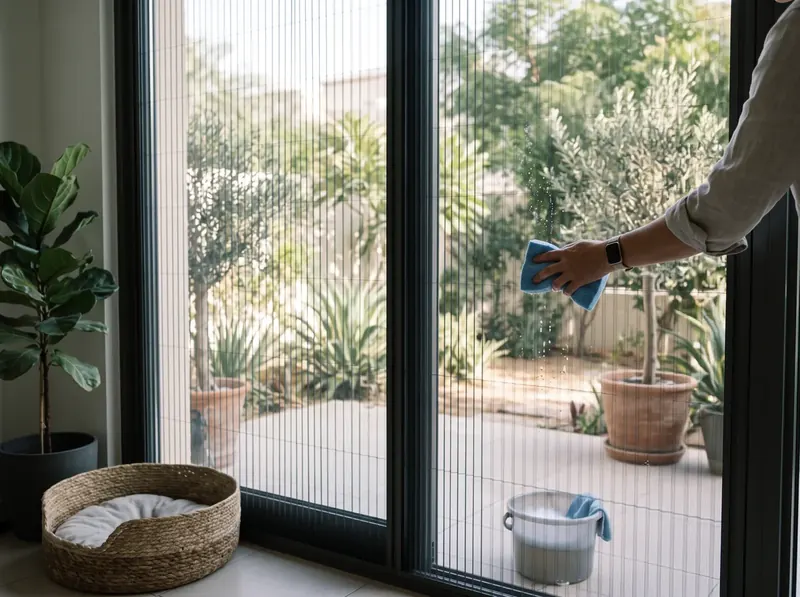
Fold, slide or roll it away so the whole track and the catch are clear.
Brush nozzle, low power, end to end. Do the side guides of a roller screen too.
A dry cloth on the magnetic strip and the profile it closes against. Grit there keeps the bar off the frame.
Run the screen end to end a few times with the handle, never by the mesh. Still stuck? Film it.
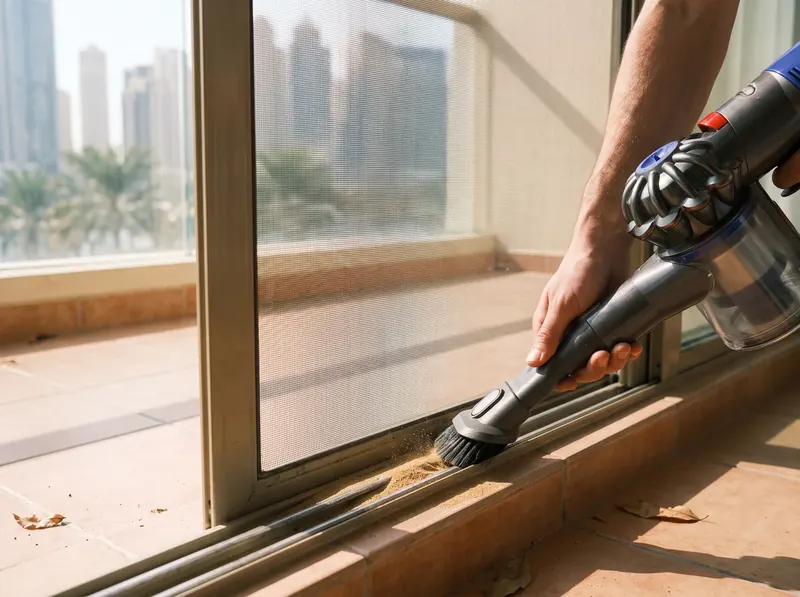
After a shamal, fine sand settles in every low track in the flat. A few grains under a roller or in front of a pleated bar are enough to stop it short of the frame.
The same dust clings to the magnetic catch and the brush seal. The screen looks shut, but a thin gap stays open along the edge, and that is where mosquitoes get in.
| Symptom | Likely cause | What to do |
|---|---|---|
| Screen stops short of the frame | Sand in the bottom track | Vacuum the track, try again |
| Pleated bar will not stay shut | Grit on the magnetic catch | Wipe the magnets and the jamb |
| Two pleated screens miss in the middle | Cords or catch out of line | Call us to reset them |
| Roller will not stay down | Worn catch or weak spring | Call us, the spring sits in the box |
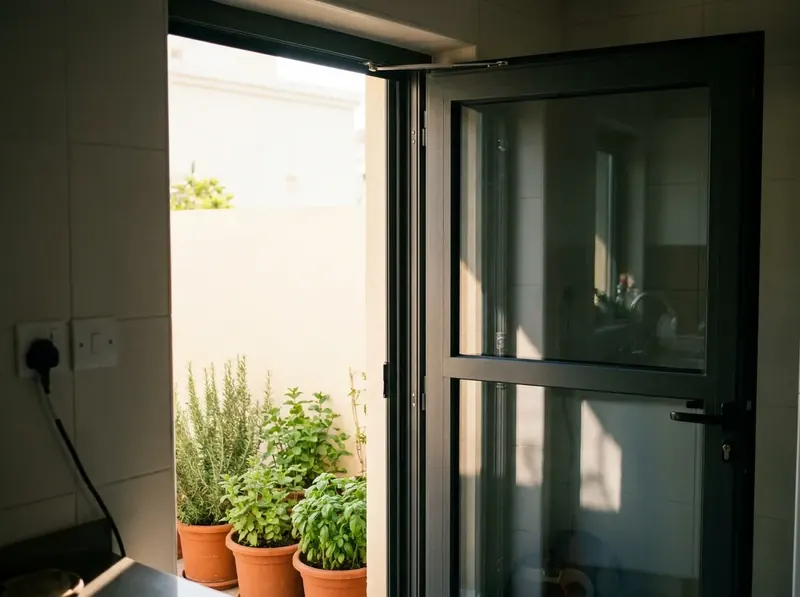
| Screen door stays open | Closer or hinges out of adjustment | Tighten hinge screws, then call us |
| Handle snapped | Worn or cracked part | New handle, AED 50 |
Cords, springs, closers and bent frames are set by our technician. Adjustments are usually done on the spot.
After cleaning, does the screen close flat against the frame?
Done. Clean the track after every dusty spell.
A part is worn or out of line. Send a short video on WhatsApp.
Does the pleated mesh close with one end ahead of the other?
The tension cords need resetting. That is a technician's job.
The cords are fine. Look at the catch and the track.
Is any part of the frame bent or cracked?
A bent frame will not close square. It needs a repair or a new screen.
Most likely a quick adjustment on site.
Quick fixes that turn a small fault into a repair.
Pulling hard against sand can snap a cord or bend the bar. Clean first, then close gently.
Oil holds sand and turns it into paste under the rollers. Keep the track dry.
A roller screen released at the bottom snaps into the box and strains the spring. Guide it up by hand.
We adjust and repair screens across Dubai, including ones another company fitted. Cords, catches, rollers and closers are priced once the technician sees the fault.
On screens we fitted, the mechanism carries 2 years of warranty and the fitting 2 years. A short video on WhatsApp usually tells us which it is before anyone comes.
Send a video first, and we tell you what it needs.
“The roller mechanism on our existing net broke. They replaced it with a new upgraded system that rolls smoother and locks in place better. Much better than the original.”
“Added nets to all winds and doors throughout the houset was a big job, but they completed in one day. Team of workers, very effiant. Photos attached.”
“Quick installation of nets in the kids! room. They were careful not to wake the baby during nap time = very considerate. Small jeb but they treated it with the same care es a big project.”
Fine sand settles in the bottom track and on the magnets. Vacuum the track, wipe the catch, and the screen usually closes flat again.
The cords or the catch have moved out of line, often after the screens were forced. A technician resets them on the spot.
Better not. The cords have to run evenly top and bottom, and a wrong turn makes the mesh close crooked.
Usually the closer needs adjusting or the hinge screws have worked loose. Tighten the screws first, then send us a video.
Yes, across Dubai. Send a video of the screen closing and a photo of the track, and we tell you what it needs.
On screens we fitted, the mechanism has 2 years and the fitting 2 years of warranty. Sand in the track is cleaning, which you can do yourself.
We reply on WhatsApp with the price and the screen that fits.