AAnderson AteufackGoogle★★★★★
“The roller mechanism on our existing net broke. They replaced it with a new upgraded system that rolls smoother and locks in place better. Much better than the original.”
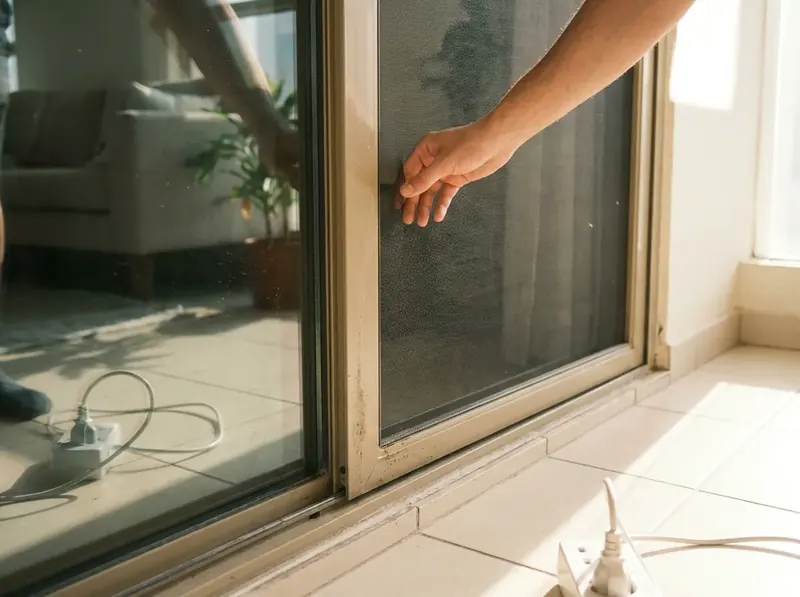
Vacuum the bottom rail, lift the panel up into the top rail, swing the bottom in over the lower rail and let it down onto its rollers. Sand in the rail is the usual reason a sliding mosquito screen jumps out. If it drops out again on a clean rail, a roller is worn or the frame is bent.
 Andrei Moroz · Head of installation
Vacuum the bottom rail and wipe the top one. Grit under a roller lifts it straight out again.
Both hands on the sides, never on the mesh.
Push the panel up into the top rail as far as it goes.
Bring the bottom edge over the lower rail while the top stays up, then let it down onto the rollers.
Slide it end to end. It should roll without catching, with the brush seal touching the frame along its full height.
| What you see | Likely cause | What to do |
|---|---|---|
| Jumps out at the same spot | Sand or grit in the bottom rail | Vacuum and wipe the rail |
| Drags and scrapes | Worn or cracked roller | New roller on a repair visit |
| Lifts out on windy days | Worn top guide | New guide on a repair visit |
| Leans, gap at one corner | Bent frame or loose corner joint | Frame repair or a new panel |
| Rubs against the glass door | Panel sitting in the wrong rail | Lift it out and refit it on its own rail |
A short video of the screen moving tells us more than a photo.
Does the panel look straight when you hold it against the frame?
The frame is fine. Clean the rails and refit it.
The frame is bent. It needs a repair, not a refit.
Do all the rollers turn freely by hand?
Refit it and test the run.
A roller needs replacing. Book a repair visit.
Does it stay in the rail after cleaning and refitting?
Done. Vacuum the rail after every shamal.
Send a video to WhatsApp 050 877 2632 and we book a repair visit.
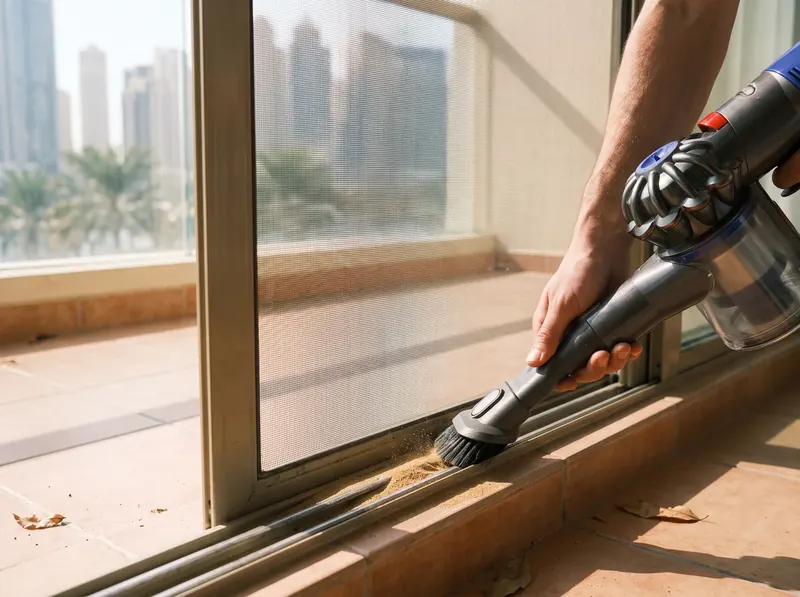
A sliding screen rides on small rollers in a shallow bottom rail. After a shamal a line of fine sand builds up there, and a roller that climbs onto grit lifts the panel out.
On high floors the wind adds to it: a gust pushes the panel, and a worn top guide lets it rise. Vacuum the rail after each dusty spell and keep it dry.
Each of these bends or tears something.
A panel dragged off its rollers twists at the corners, and a twisted frame will not stay in the rail.
The mesh pops out of its groove, and then it is a rescreening job at AED 200.
It holds sand like glue. Keep the rail dry and clean.
from AED 200Screens back on track, handles, rescreening
 AED 250/running m
Bent frames straightened or repainted
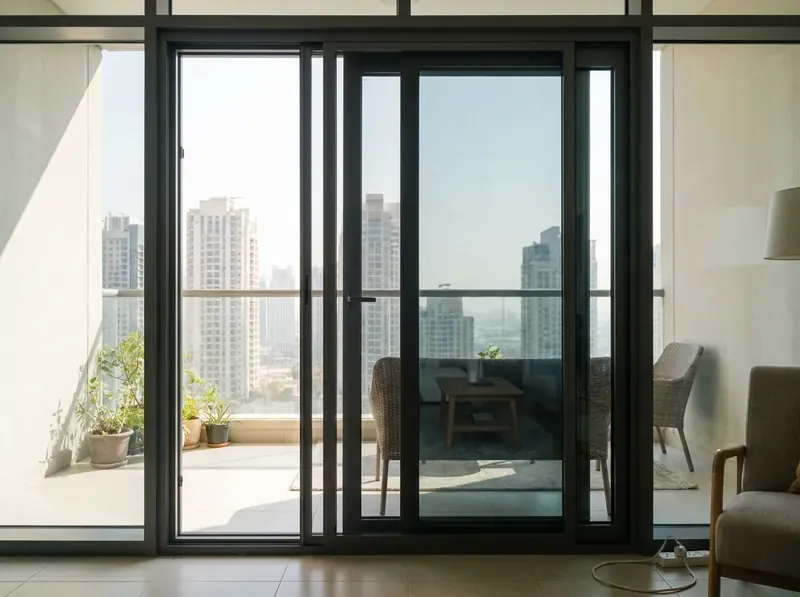 from AED 670
A new panel on its own rail
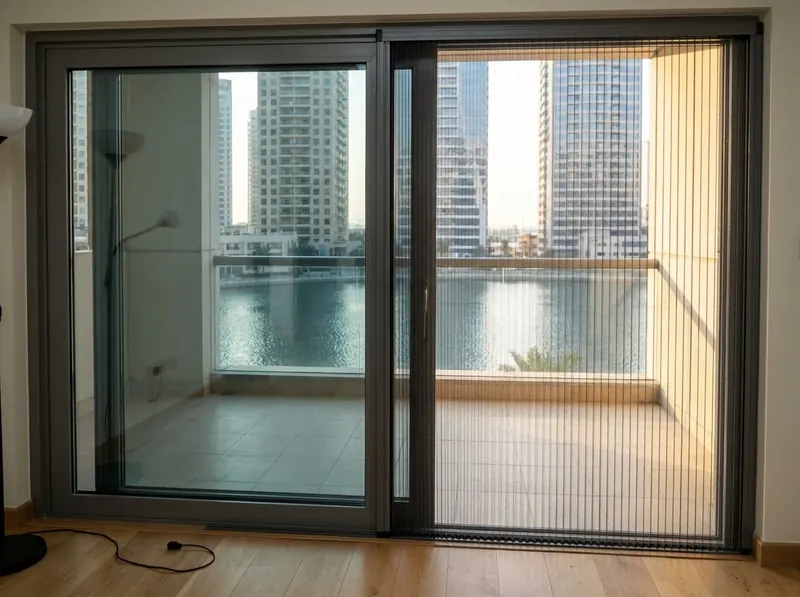 AED 1,550/door
No panel to drop, low flat track
“The roller mechanism on our existing net broke. They replaced it with a new upgraded system that rolls smoother and locks in place better. Much better than the original.”
“Added nets to all winds and doors throughout the houset was a big job, but they completed in one day. Team of workers, very effiant. Photos attached.”
“Quick installation of nets in the kids! room. They were careful not to wake the baby during nap time = very considerate. Small jeb but they treated it with the same care es a big project.”
Most often sand in the bottom rail or a worn roller. If it falls out even on a clean rail, check the frame: a bent one will not stay in.
Lift it up into the top rail and pull the bottom edge towards you. Refit it the same way in reverse.
Rollers and guides are priced on the repair visit, once we see the fault. A new handle is AED 50 and new standard mesh AED 200 per screen.
Better not: oil and grease hold sand in the rail. A clean, dry rail and rollers that turn freely keep the panel running.
It has no panel to drop out and runs on a low flat track. On a sliding balcony or patio door it costs AED 1,550 per door.
Film the fault and send it on WhatsApp to 050 877 2632. The mechanism is covered for 2 years and the frame for 5 years.
We reply on WhatsApp with the price and the screen that fits.