AAnderson AteufackGoogle★★★★★
“The roller mechanism on our existing net broke. They replaced it with a new upgraded system that rolls smoother and locks in place better. Much better than the original.”
Repair it when the frame lies flat and the corners hold: new mesh goes into your old frame for AED 200 per screen with standard mesh, AED 300 with metal and AED 350 with aluminium. Replace the screen when the frame is bent, the corners have cracked or the groove no longer grips.
 Andrei Moroz · Head of installation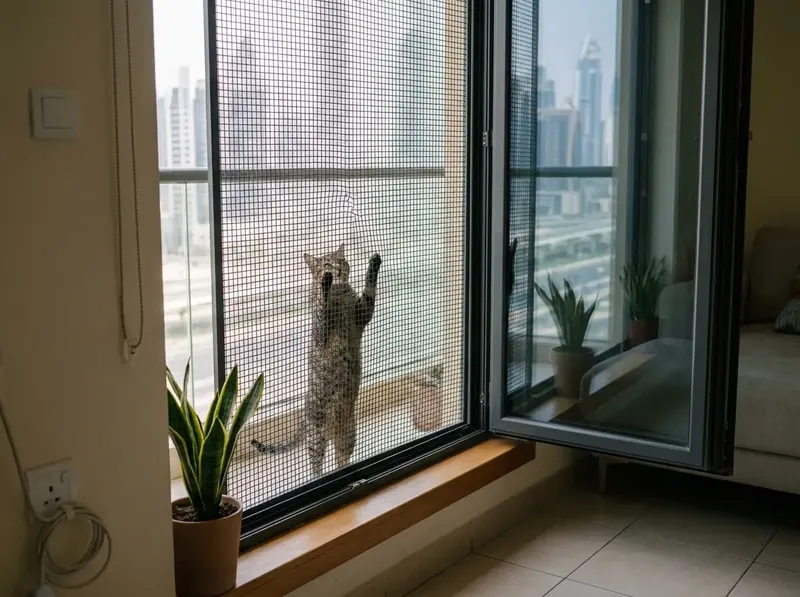
Where and how the mesh tore says more than the size of the hole. A split low down on a door screen at paw height points to a cat or a dog, and the next mesh should resist claws.
Mesh that goes brittle and splits in several places at once has been cooked by sun and scoured by sand. A single clean cut from a chair or a toy leaves the rest of the mesh sound.
Lay the screen flat. Does the frame touch the floor all along?
The frame is straight. New mesh will sit tight in it.
A bent frame pulls new mesh out of shape. Plan a new screen.
Are all four corners firm when you press them?
The frame can be reused as it is.
Loose corners can often be reset. Cracked ones mean a frame repair or a new screen.
Does the rubber spline still grip in its groove?
New spline and mesh go straight in.
A worn groove lets fresh mesh slip out. The frame is finished.
Is it a framed screen, not a curtain on tape or hook and loop?
It can take new mesh.
A curtain cannot be rescreened. A fitted screen replaces it.
| Situation | What we do | Price |
|---|---|---|
| Standard mesh torn, frame fine | New mesh in the old frame | AED 200 per screen |
| Metal mesh torn | New metal mesh | AED 300 per screen |
| Aluminium mesh torn | New aluminium mesh | AED 350 per screen |
| Handle snapped with the mesh | New handle | AED 50 |
| Frame bent or corners cracked | New fixed frame screen | AED 400 per m² |
| Cat keeps tearing it | New screen with pet mesh | AED 800 per m² |
On screens we made, the warranty covers the frame, mechanism and fitting. A claw or a sharp object through the mesh is repaired at these list prices.
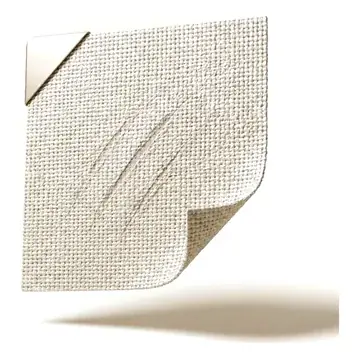
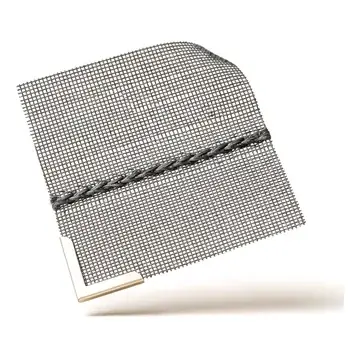
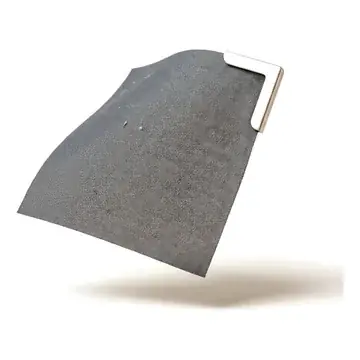
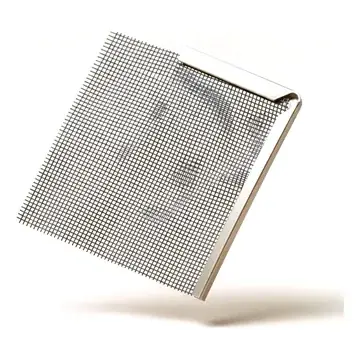
A sticky patch closes a small hole for a while. In summer heat the glue softens, the edges lift, and the patch shows as a dark square against the light.
A tear longer than a finger usually keeps running, because the mesh around it is already loose. At that point new mesh costs less than the time spent patching.
We tell you before taking the job.
The mesh is folded and held by tension cords, so this is not a simple rescreen. We look first and price after the visit.
Plastic dries out in strong sun. By the time the mesh tears, the corners are often ready to crack too.
Thin profiles bend when new mesh is tensioned. A made to measure aluminium frame holds the tension.
Prices from our list.
“The roller mechanism on our existing net broke. They replaced it with a new upgraded system that rolls smoother and locks in place better. Much better than the original.”
“Added nets to all winds and doors throughout the houset was a big job, but they completed in one day. Team of workers, very effiant. Photos attached.”
“Quick installation of nets in the kids! room. They were careful not to wake the baby during nap time = very considerate. Small jeb but they treated it with the same care es a big project.”
Yes, when the frame is straight and the corners hold. We fit new mesh in the old frame from AED 200 per screen.
Usually yes. New standard mesh is AED 200 per screen, while a new fixed frame screen is AED 400 per m² of opening.
Yes, if the frame passes the checks above. Send a photo of the tear and one of the whole screen on WhatsApp first.
Pet mesh, with thicker yarn that claws do not pierce. Standard mesh would tear again in the same place.
Our warranty covers the frame for 5 years, the mechanism for 2 and fitting for 2. Damage from outside, such as claws, is repaired at list prices.
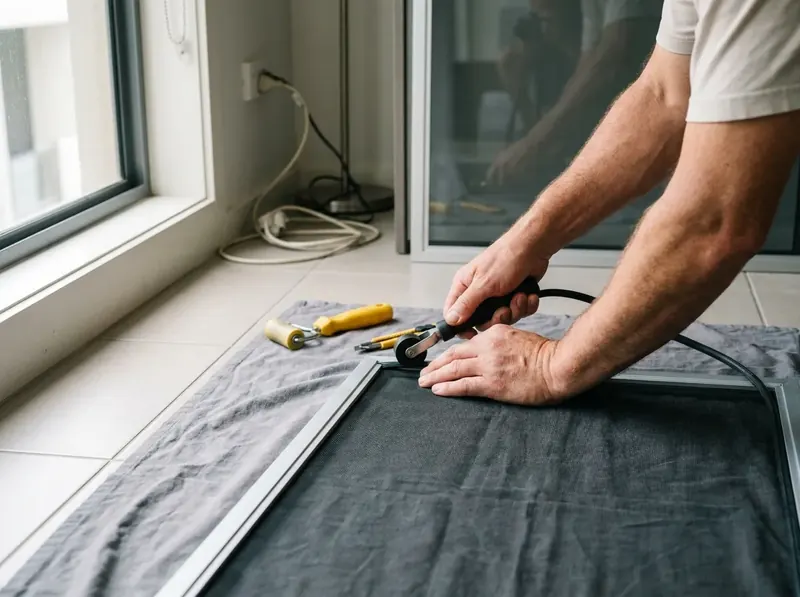
Small framed screens, yes: you need new spline, mesh and a roller tool, and the mesh has to end up tight on all four sides. Pleated screens hang on tension cords and are a job for us.
We reply on WhatsApp with the price and the screen that fits.