AAnderson AteufackGoogle★★★★★
“The roller mechanism on our existing net broke. They replaced it with a new upgraded system that rolls smoother and locks in place better. Much better than the original.”
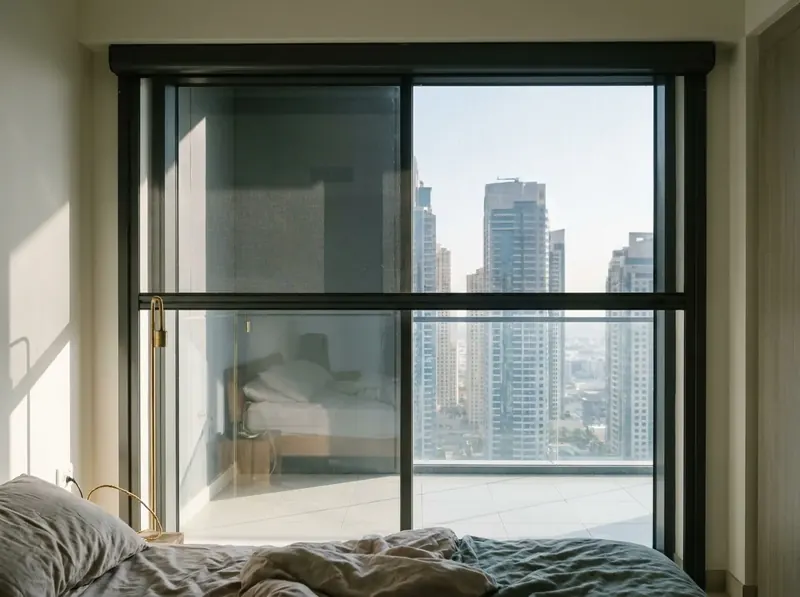
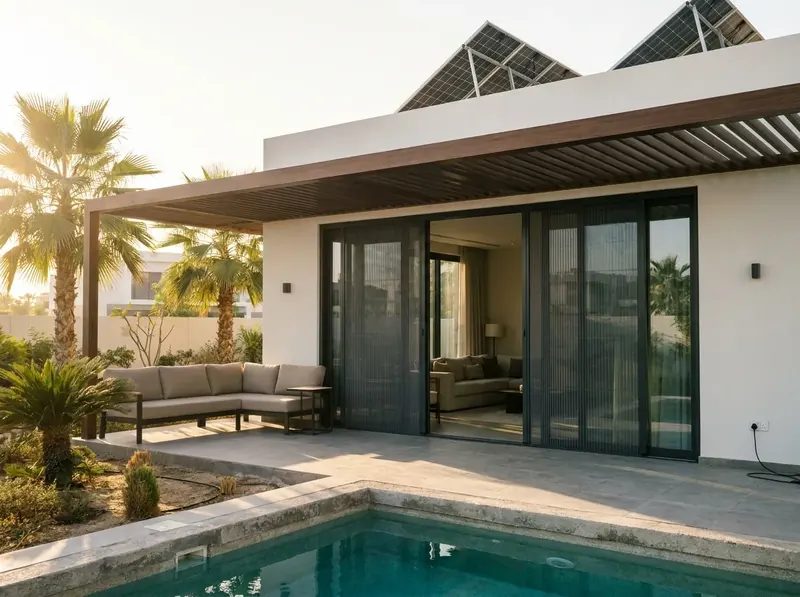
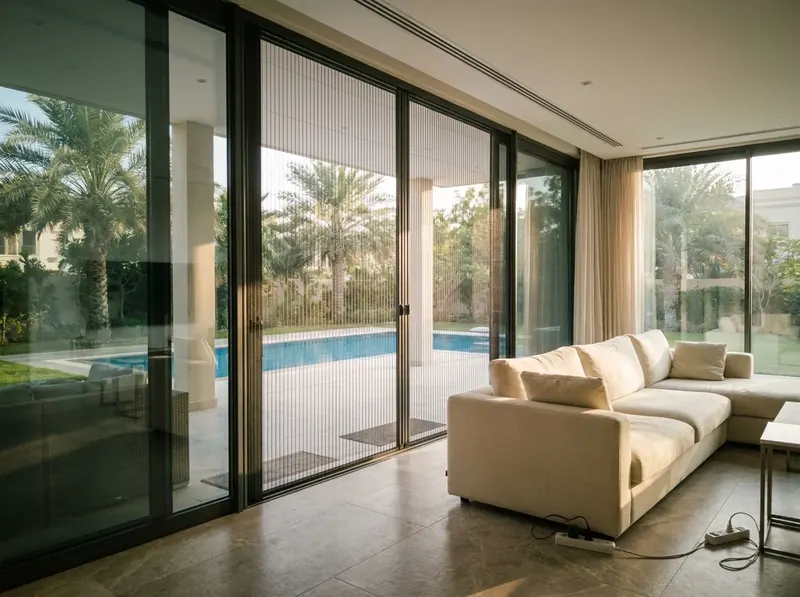
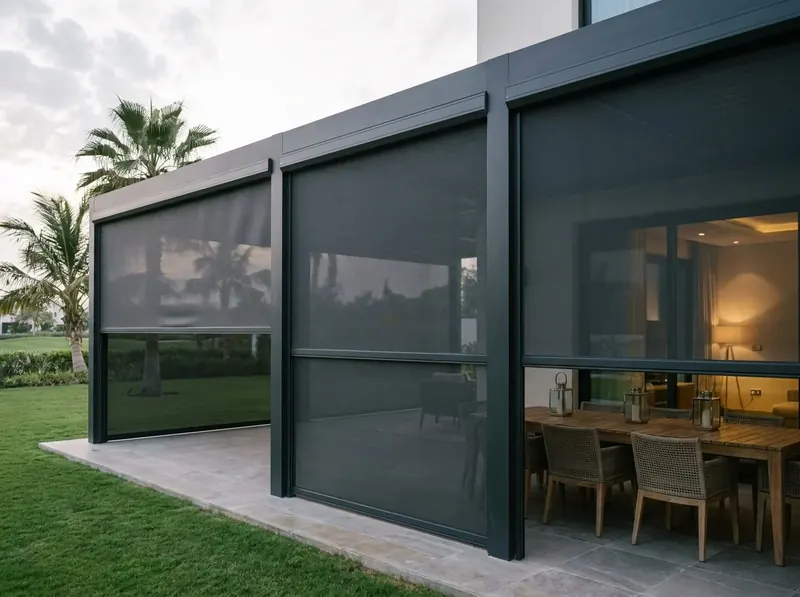
A motorized mosquito screen is a roller screen with a tubular motor hidden in the cassette. Press a wall switch or a remote and the mesh runs down its side rails. It suits tall glass, pergolas and openings you cannot reach. From AED 1,350 for a window and AED 2,250 for a wide door, plus 5% VAT.
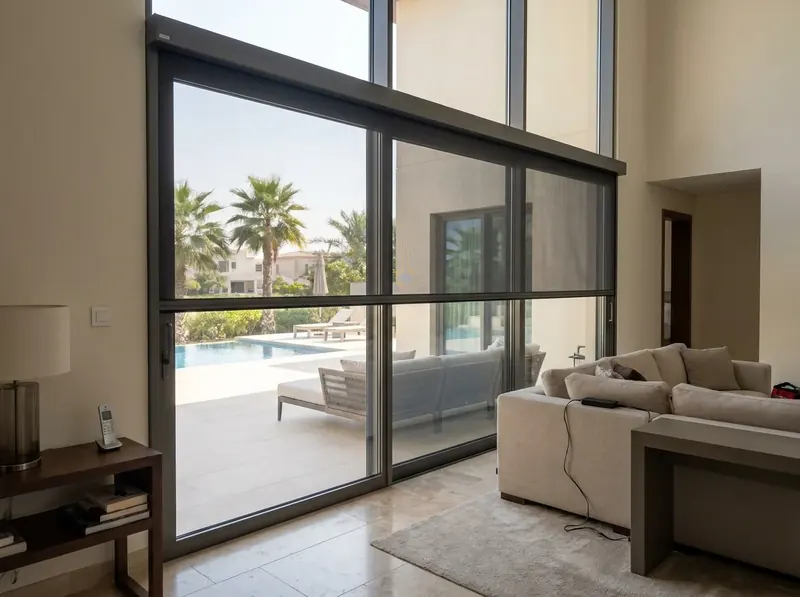
A net that comes down at a buttonAutomatic mosquito screen with a motor
The roller bar is too high to reachRoller screen with a tubular motor
A net I can close from the sofaRemote control mosquito screen
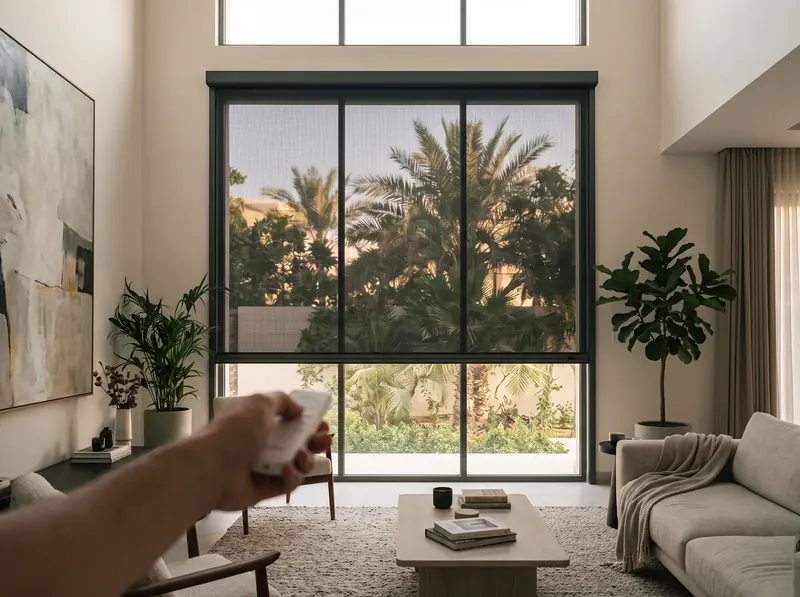
A tubular motor sits inside the roller shaft in the cassette above the opening. It winds the mesh down and back up, while two side rails keep the edges straight all the way to the floor.
You run it from a wall switch, a remote or a phone app, and you can stop it partway. At fitting we set the upper and lower stop points, so the mesh closes to the same line every time.
Is the top of the opening out of reach from the floor?
That is where a motor earns its price: one press, no ladder.
A pleated screen from AED 380 or a manual roller does the job without a cable.
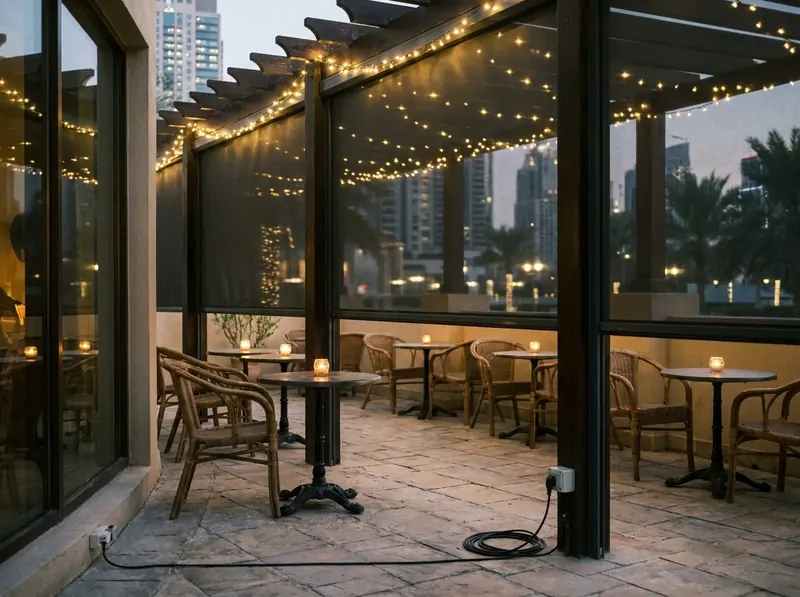
Is there a socket or a light point near the top of the opening?
The cable run to the cassette is short and easy to hide.
A cable has to reach the cassette, or we look at a battery motor.
Is it a pergola side open to the wind?
Take zip-track rails: they hold the mesh edges against gusts.
A motorized roller in standard side rails covers it.
| Part | What you get |
|---|---|
| Motor | Tubular motor inside the roller shaft |
| Cassette | Aluminium box above the opening, powder coated in your RAL colour |
| Side rails | Standard rails, or zip-track rails for open pergolas |
| Control | Wall switch, remote or phone app |
| Mesh | Standard fibreglass, or anti dust on the windy side |
| Parts | Italian components |
Power comes from a mains cable or a battery motor. Sensors and smart home links are priced per project.
Tap your opening. Made to measure, fitted and set up with you.
The nearest socket or light point and how a cable reaches the cassette. In towers, building management approves a new cable first.
A flat surface above the opening or enough depth inside the reveal.
Zip-track rails for an open pergola side; switch, remote or app, and where the switch goes.
Usually 3 to 5 days from survey to fitting once power is ready. We set the stop points and test every control with you.
A motor adds cost and a part that needs power.
A pleated screen from AED 380 opens by hand, with no cable to plan.
If no cable reaches the cassette and a battery motor does not suit, go manual.
A motor is dearer to fix than a spring. Weigh that against how often you would climb up.
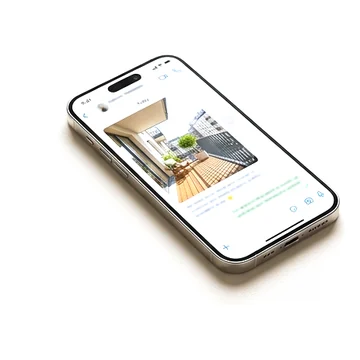 Photo
PhotoSend the opening on WhatsApp. We reply with a price range.
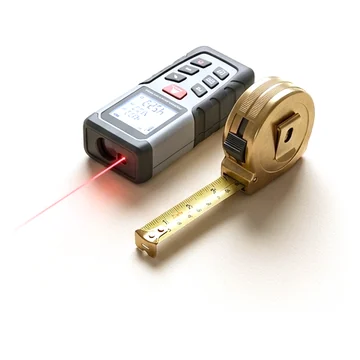 Survey
We measure and confirm the price. Free anywhere in Dubai.
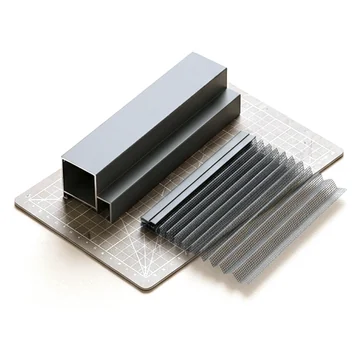 Made to size
Made to your opening, mesh and frame colour. From survey to fitting in 3 to 5 days.
 Fitting
Our own team fits, adjusts and cleans up.
Warranty: 5 years on the frame, 2 years on the mechanism, 2 years on fitting.
“The roller mechanism on our existing net broke. They replaced it with a new upgraded system that rolls smoother and locks in place better. Much better than the original.”
“Added nets to all winds and doors throughout the houset was a big job, but they completed in one day. Team of workers, very effiant. Photos attached.”
“Quick installation of nets in the kids! room. They were careful not to wake the baby during nap time = very considerate. Small jeb but they treated it with the same care es a big project.”
From AED 1,350 for a window or single panel and from AED 2,250 for a wide door, tall opening or pergola side, both plus 5% VAT.
Our motorized screens run from a wall switch, a remote or a phone app. A link to a smart home system is priced per project after the free survey.
Yes. The motor needs power at the cassette, from a mains cable or a battery. Bringing a cable up may need an electrician; the measurer tells you at the visit.
Both depend on the motor you choose, so we do not quote figures here. The measurer shows the motor options at the survey.
You can stop the mesh partway at any moment from the switch or the remote. For obstacle stops, the measurer shows the motor options at the survey.
Yes for tall glass, pergolas and anything above arm's reach. On a window at arm's height, a pleated screen from AED 380 does the same job.
Not quite. A zip screen holds the mesh edges inside its rails against wind, and it can be manual or motorized.
5 years on the frame, plus 2 years each on the mechanism and on fitting.
We reply on WhatsApp with the price and the screen that fits.