AAnderson AteufackGoogle★★★★★
“The roller mechanism on our existing net broke. They replaced it with a new upgraded system that rolls smoother and locks in place better. Much better than the original.”
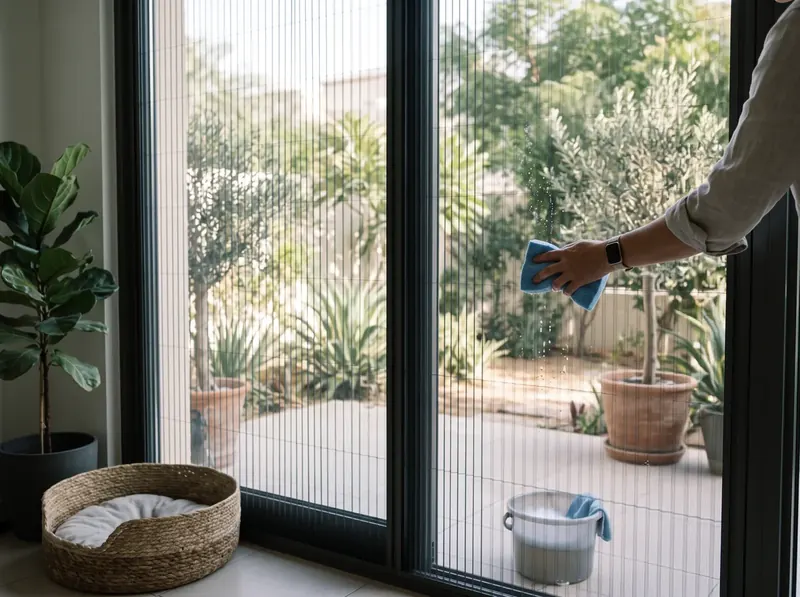
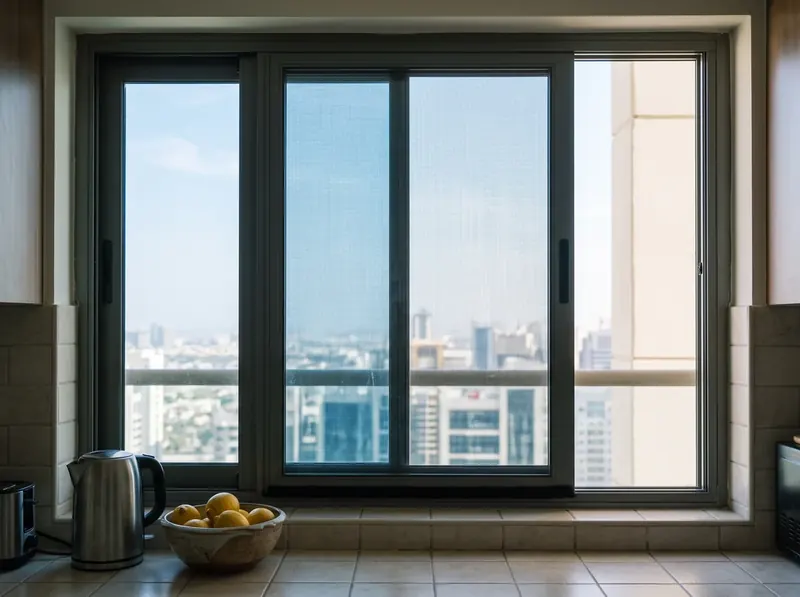
With a soft brush vacuum, a damp sponge and clean tracks. Frame and sliding screens lift out for a rinse; pleated and roll-up screens are cleaned in place. The moving parts matter more than the mesh: cords, rollers, springs and hinges fail when grit sits in them. Torn mesh is replaced from AED 200 per screen.
 Andrei Moroz · Head of installation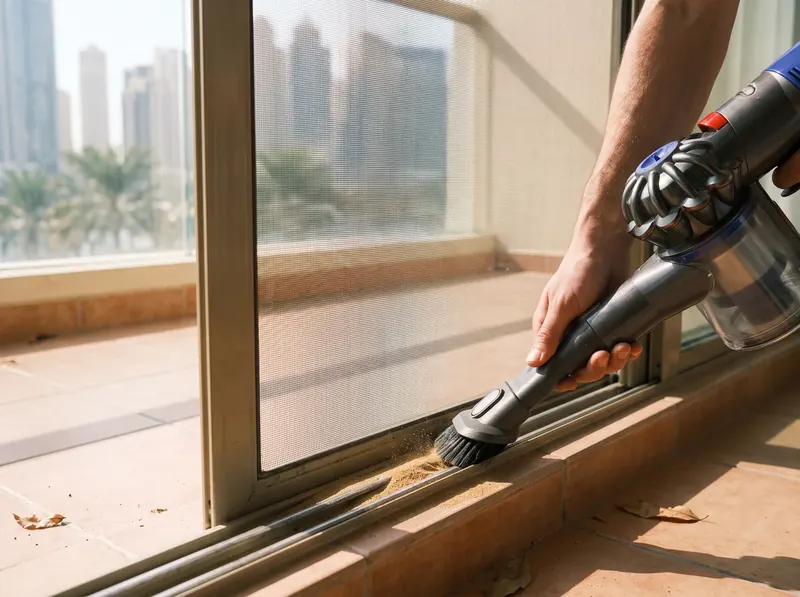
A vacuum with a soft brush nozzle, two sponges, lukewarm water with a drop of mild dish soap, a microfibre cloth and an old toothbrush for the corners. That is the whole kit.
Leave out solvents, bleach, abrasive pads and the hose on full. The mesh coating, pleat cords and brush seals are what they damage first.
Turn the clips on a fixed frame. A sliding panel lifts up into its top rail and the bottom swings towards you.
A thumb pressed into the mesh leaves a dent that stays.
Lukewarm water and a soft sponge on both sides. No hot water and no solvents.
Lean it on a wall in the shade, away from full sun and the hair dryer.
Wipe the clips or rails first, or the dirt goes straight back in.
| When | What to do |
|---|---|
| Every few weeks | Vacuum the mesh and the tracks with a soft brush |
| After a shamal | Tracks first, then the mesh, then a damp sponge |
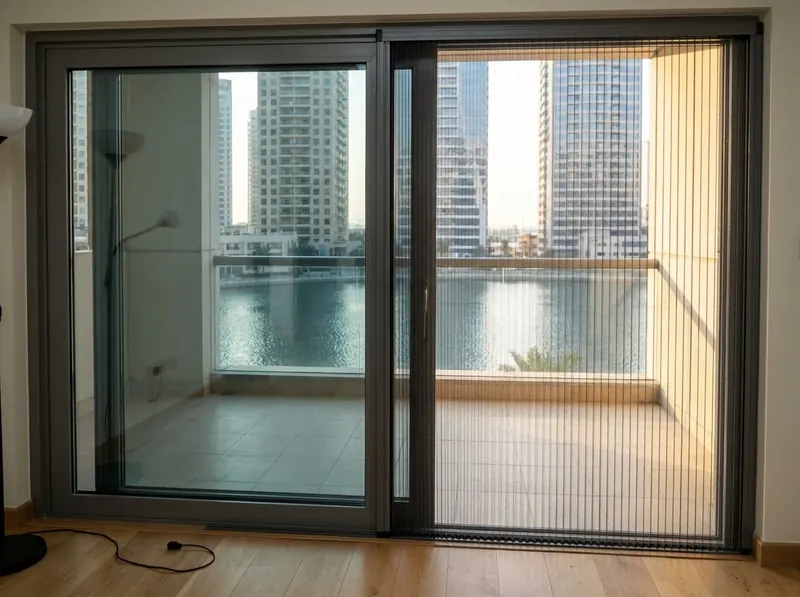
| When the mesh looks grey | Rinse frames in the shower, wipe pleated and roll-up mesh in place |
| When a hinge squeaks | A drop of light oil on the hinge, never on a track |
| When it drags or closes crooked | Stop, clean the track, then send us a video |
| Before a move-out inspection | Clean everything and check the mesh for tears |
Only dry mesh goes back into a cassette or a roll-up box.
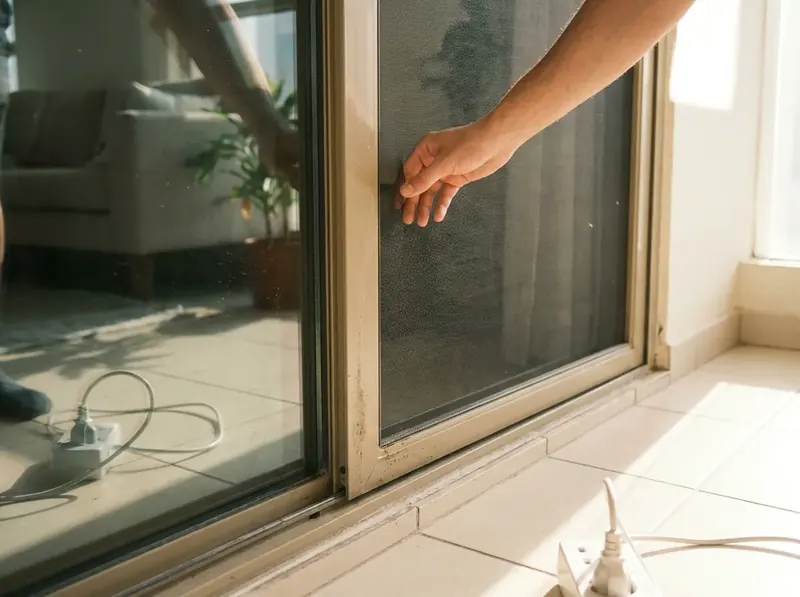
Pleated screens run on thin tension cords through the pleats. Grit on the cords makes them rub, so keep the track clean and pull the bar straight, not at an angle.
Roll-up screens have a spring in the box, and letting the bar snap up is what tires it. On a hinged screen door the hinges and the closer take the knocks.
Some faults look like dirt but are wear.
Rescreening costs AED 200 per screen for standard mesh, AED 300 for metal and AED 350 for aluminium.
We repaint the profile in your RAL colour at AED 250 per running metre.
A cord may have slipped. Send a video on WhatsApp to 050 877 2632 before you force it.
from AED 200Rescreening, handles, screens back on track
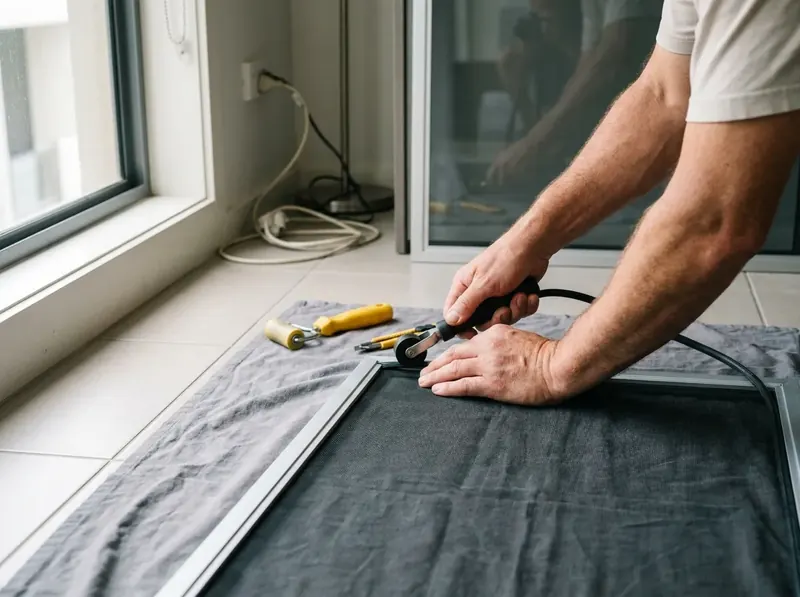 from AED 200
Standard, metal or aluminium mesh
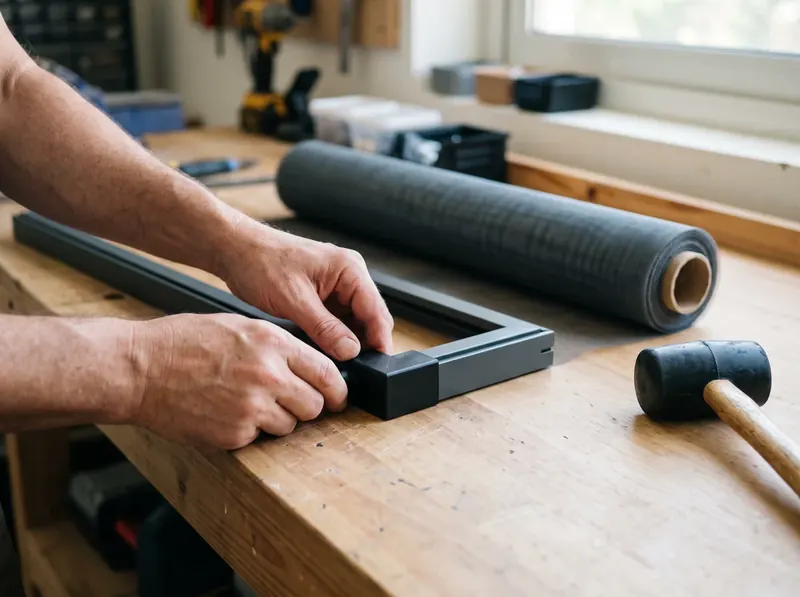 AED 250/running m
Repaint in the RAL colour of your frames
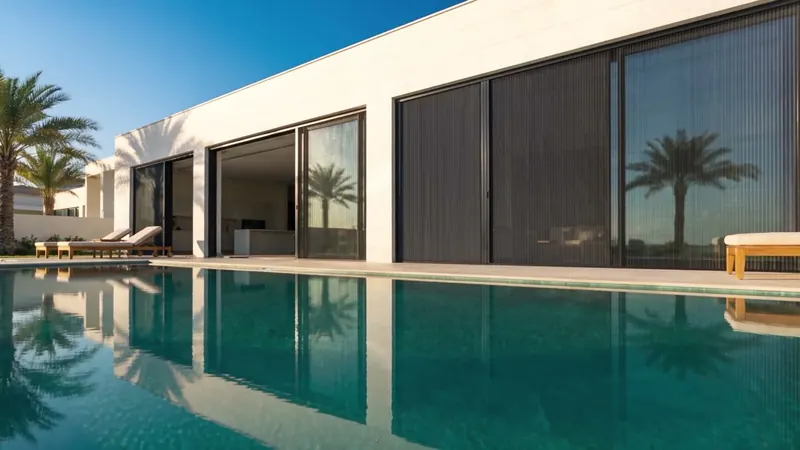 from AED 380
Cleaned in place, never taken down
“The roller mechanism on our existing net broke. They replaced it with a new upgraded system that rolls smoother and locks in place better. Much better than the original.”
“Added nets to all winds and doors throughout the houset was a big job, but they completed in one day. Team of workers, very effiant. Photos attached.”
“Quick installation of nets in the kids! room. They were careful not to wake the baby during nap time = very considerate. Small jeb but they treated it with the same care es a big project.”
A soft brush vacuum, a sponge and lukewarm water with a drop of mild dish soap. Skip solvents, bleach and hard brushes.
No. Oil in a track catches sand and makes things worse. A dry, clean track is what lets a screen glide.
No. It is cleaned in place with a vacuum and a damp sponge. Taking it down can put the cords out of line.
Holes, splits, or mesh that sags away from the frame after cleaning. Rescreening with standard mesh costs AED 200.
Dry hinges or grit in the closer. A drop of light oil on the hinge pins fixes most squeaks; leave the tracks dry.
5 years on the frame, 2 years on the mechanism and 2 years on fitting. Regular cleaning like this is what the screens are made for.
We reply on WhatsApp with the price and the screen that fits.