AAnderson AteufackGoogle★★★★★
“The roller mechanism on our existing net broke. They replaced it with a new upgraded system that rolls smoother and locks in place better. Much better than the original.”
A skylight that opens for air can take a mosquito screen, and it is usually motorized because nobody reaches the ceiling by hand. The cassette and side rails sit in the shaft under the glass. Every roof opening is built differently, so the price is set after the free survey.
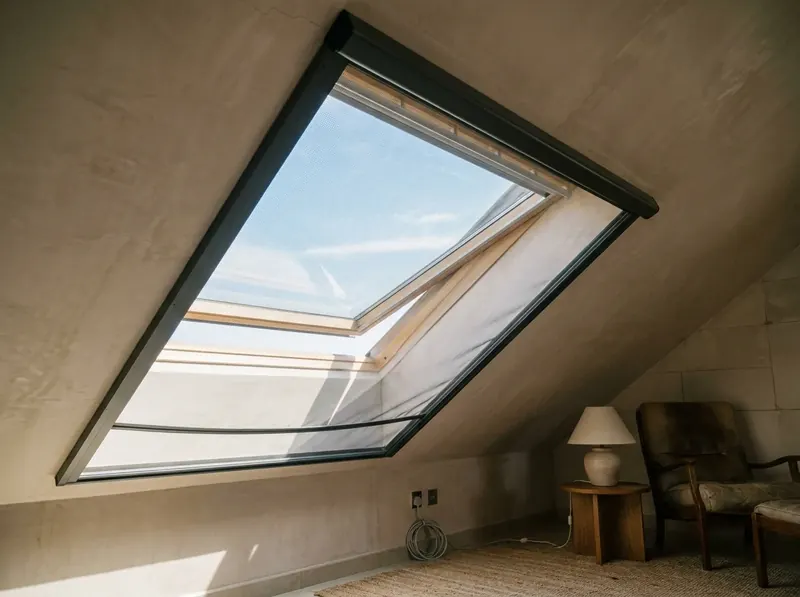
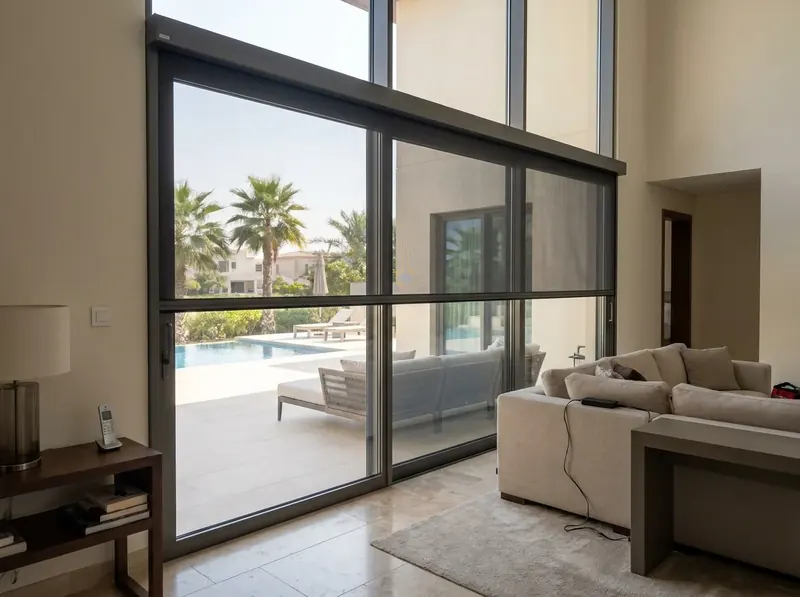
A wall window hangs straight, so the mesh drops into its guides by its own weight. Under sloped or flat roof glass, the mesh has to be held along both sides the whole way.
Roof glass usually opens outwards, so the screen goes inside the shaft beneath it. The cassette sits at one end of the shaft and the side rails run along its walls, if the shaft is deep enough.
Prices per m² from our price list.
Does the skylight actually open?
A screen makes sense. Send a photo of it open from below.
Glass that never opens lets no insects in. Save the money.
Can you reach it from a stair or a gallery?
A manual roller or a fixed frame may be enough and needs no cable.
A motor with a wall switch saves the ladder every evening.
Is there a light point or socket in the ceiling near the shaft?
The motor can be wired from there.
A battery motor or a cable through the ceiling.
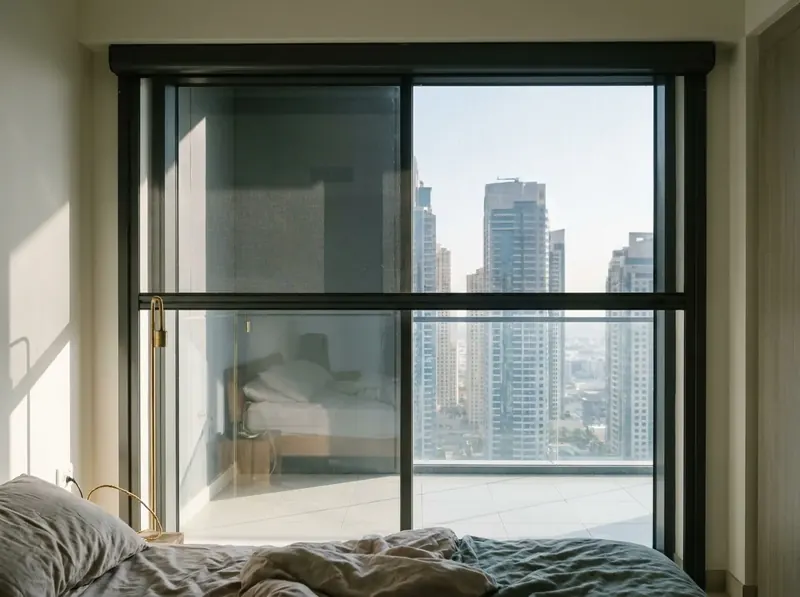
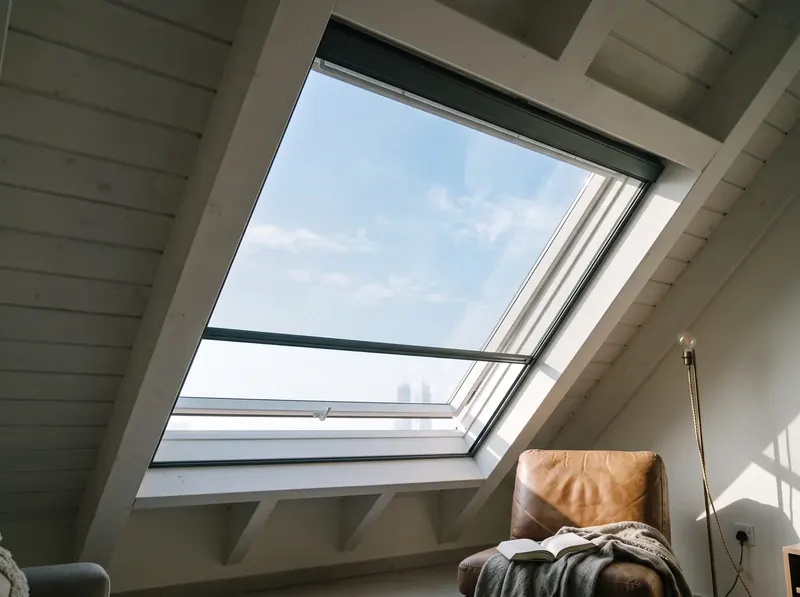
Tap your skylight. A motorized one is priced on site.
With the AC on most of the year, many Dubai skylights stay shut. A screen matters on the ones you open in the cooler months, over a stairwell, a majlis or a loft.
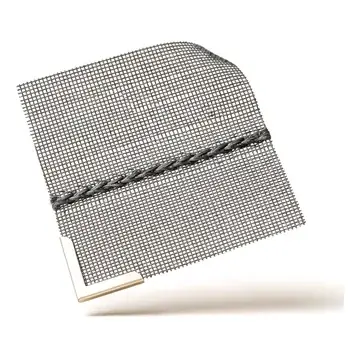
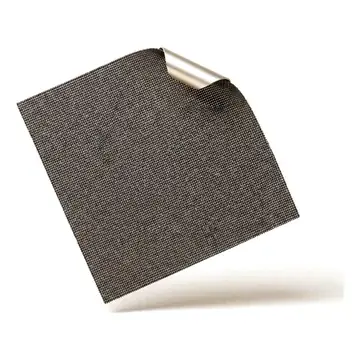
After a shamal, fine sand settles on the roof glass and drops in when the skylight opens. Lower the mesh first, then open the glass. Anti dust mesh holds back more grit than standard.
Its depth and walls: there must be room for a cassette and two side rails.
Flat, sloped or upright glass changes how the mesh is held along its length.
By a rod, a crank or its own motor. The screen must stay clear of it.
Where a cable reaches the cassette and where the switch goes.
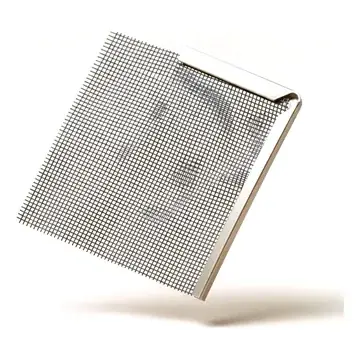
A net for the glass in the ceilingSkylight mosquito screen
The tunnel from the ceiling up to the glassSkylight shaft
Some roof openings cannot take a screen. We say so on site.
If the glass never opens, nothing flies in through it. No screen needed.
Without room under the glass for a cassette and rails, a rolling screen will not fit.
A rolling mesh needs straight edges. Some domes take a custom shape frame; we check on site.
from AED 1,350Motor, rails and controls explained
AED 1,000/m²Pulled by hand, within reach
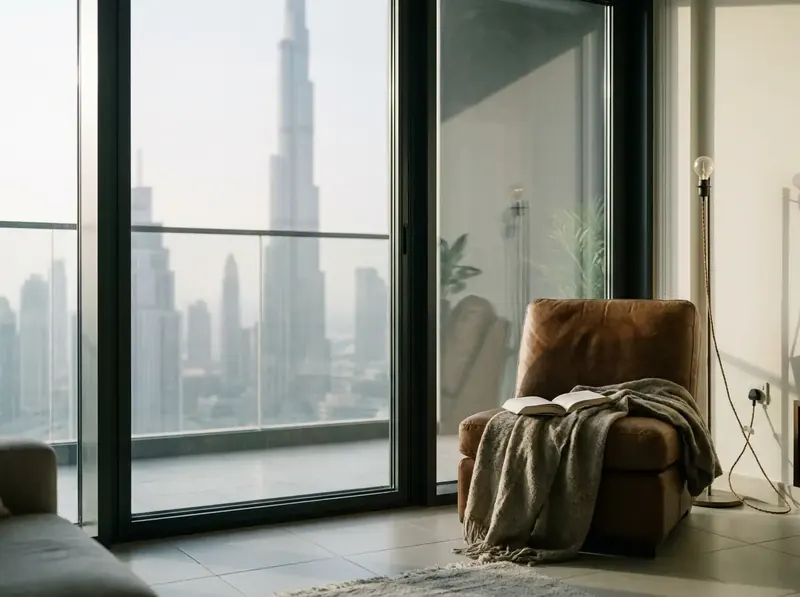 AED 400/m²
When the shaft allows it
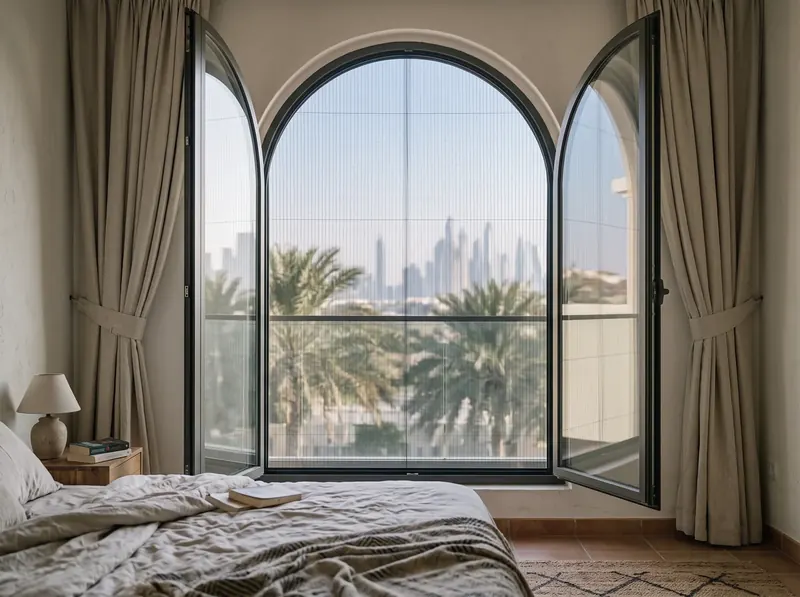
Arched, round and odd openings
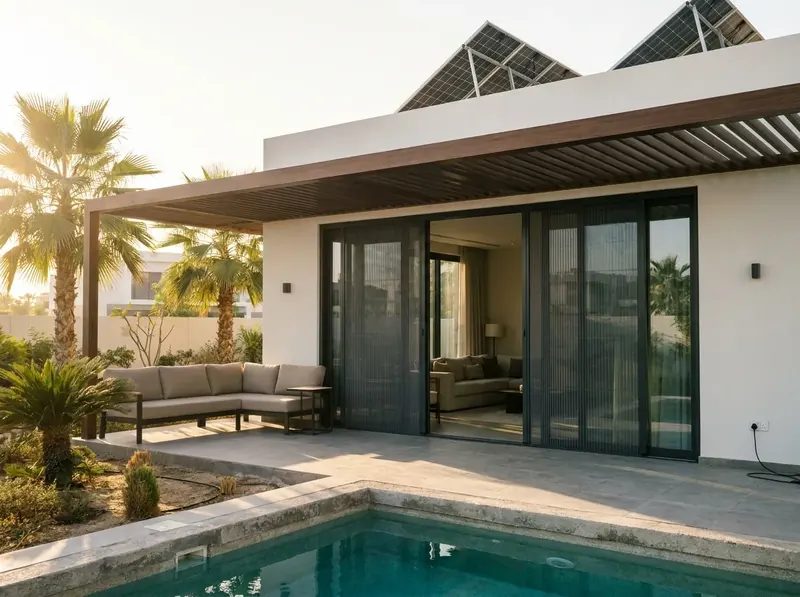
Every opening of a Dubai villa
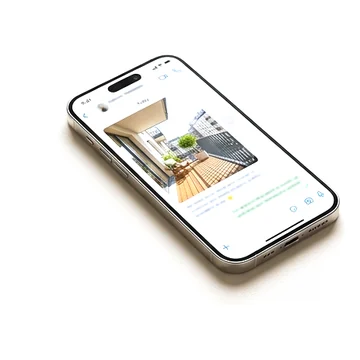 Photo
PhotoSend the opening on WhatsApp. We reply with a price range.
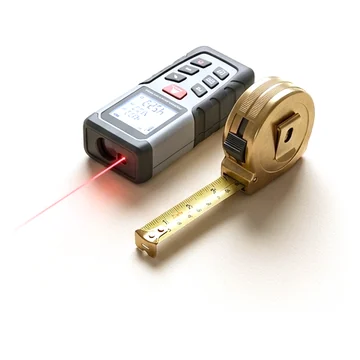 Survey
We measure and confirm the price. Free anywhere in Dubai.
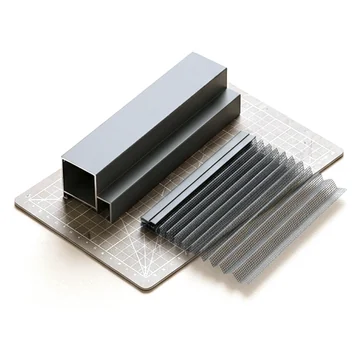 Made to size
Made to your opening, mesh and frame colour. From survey to fitting in 3 to 5 days.
 Fitting
Our own team fits, adjusts and cleans up.
Warranty: 5 years on the frame, 2 years on the mechanism, 2 years on fitting.
“The roller mechanism on our existing net broke. They replaced it with a new upgraded system that rolls smoother and locks in place better. Much better than the original.”
“Added nets to all winds and doors throughout the houset was a big job, but they completed in one day. Team of workers, very effiant. Photos attached.”
“Quick installation of nets in the kids! room. They were careful not to wake the baby during nap time = very considerate. Small jeb but they treated it with the same care es a big project.”
Often yes, if the skylight opens and the shaft has room for a cassette and side rails. We confirm it at the free survey.
A skylight is priced after the free survey. For reference, a motorized screen on a wall window starts from AED 1,350 plus 5% VAT.
A skylight is usually out of reach. One press on the switch, the remote or the app draws the mesh across, with no ladder.
Power has to reach the cassette, by a cable or a battery motor. If the cable goes through the ceiling, the measurer says whether you need an electrician.
If the glass opens by its own motor, yes. With a rod or a crank, the measurer checks that the screen stays clear of it.
Standard mesh lets most daylight through. Rolled up, the glass is completely clear.
It stops insects and some grit. Anti dust mesh at AED 800 per m² holds back more of the fine sand a shamal leaves on the roof.
We reply on WhatsApp with the price and the screen that fits.