AAnderson AteufackGoogle★★★★★
“The roller mechanism on our existing net broke. They replaced it with a new upgraded system that rolls smoother and locks in place better. Much better than the original.”
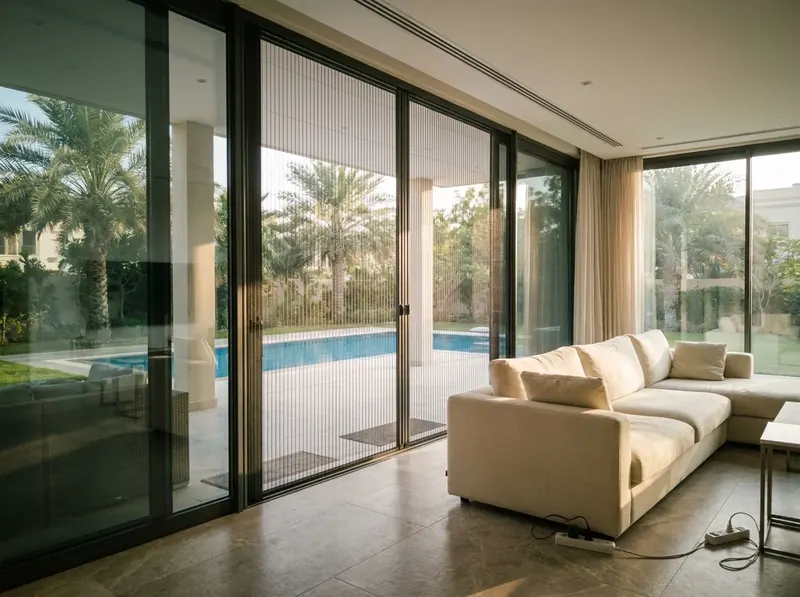
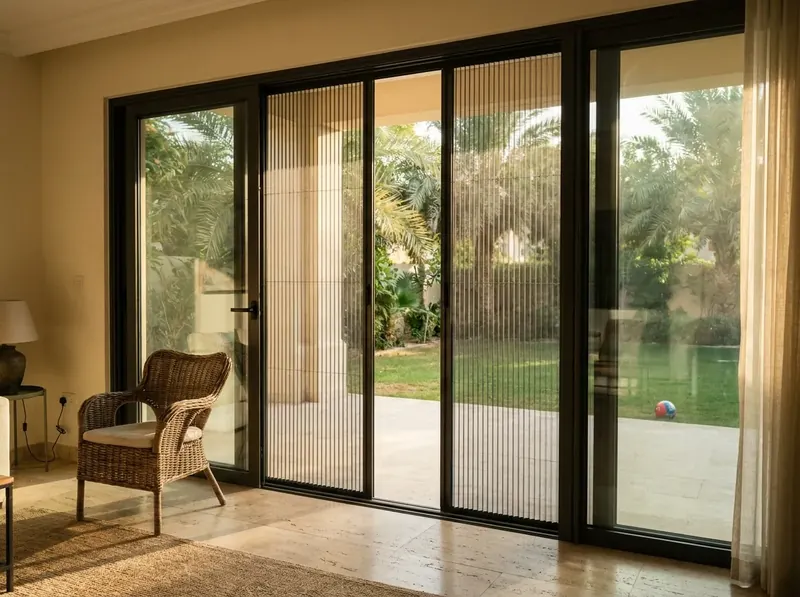
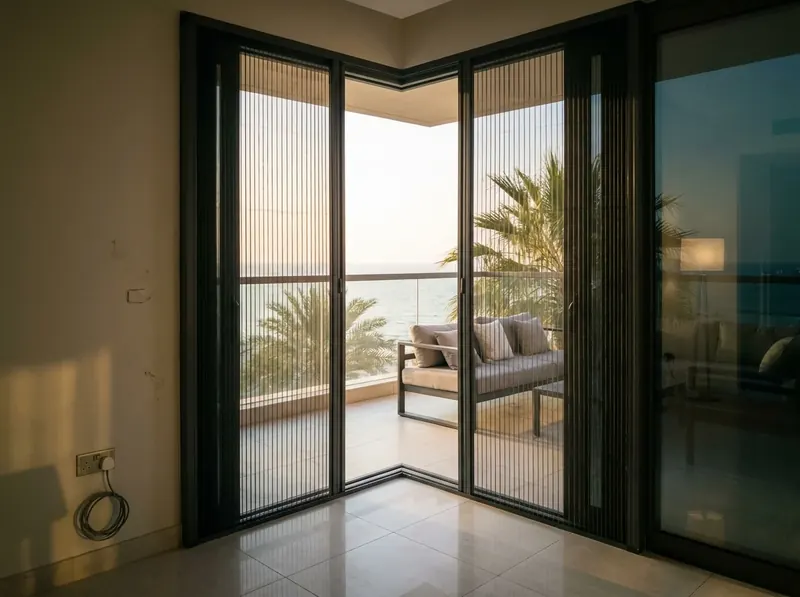
Screen only the leaves that open, with a system that folds away. A pleated Proxima closes a sliding glass wall up to 8 m wide in one panel, Double Centra meets in the middle from AED 1,550, and Corner closes a terrace corner with no post. Open, the mesh sits in a slim cassette and the view stays whole.
 Andrei Moroz · Head of installation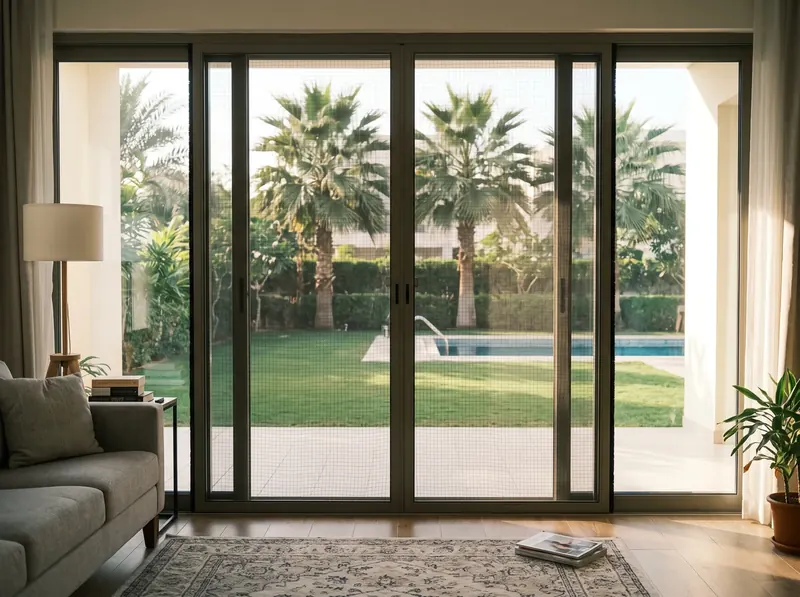
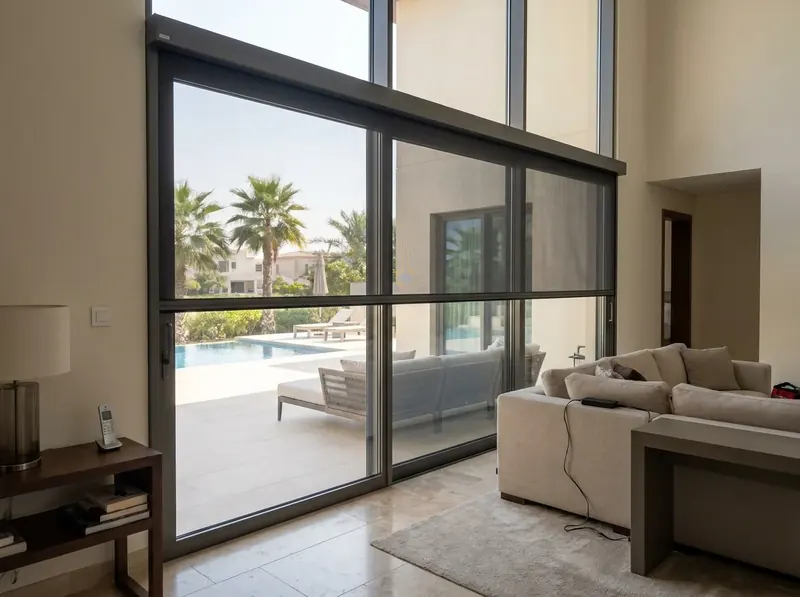
A panoramic window is usually a run of fixed glass with one or more leaves that slide. Only the gap that opens lets mosquitoes in, so only that gap needs a screen.
On a lift and slide or multi-leaf wall, the gap can be several metres wide. A framed panel that size is heavy to move, while a pleated screen folds along its own guides.
| System | Opening | PVL 39 maximum |
|---|---|---|
| Proxima | Sliding and lift and slide walls | 8.0 × 3.0 m, or 6.0 × 4.0 m with overlap |
| Double Centra | Wide sliding doors, meets in the middle | 8.0 × 3.0 m, or 6.0 × 4.0 m with overlap |
| Uno | One sliding leaf, folds to one side | 3.5 × 3.0 m, or 3.0 × 4.0 m with overlap |
| Corner | Each side of a corner with no post | 3.5 × 3.0 m, or 3.0 × 4.0 m with overlap |
Limits from the PVL tables. The real maximum depends on the ratio of height to width, so the measurer sets it on site.
Do several leaves of the wall slide open?
One Proxima or a Double Centra across the full gap.
Screen only the leaf that opens. An Uno or a sliding panel is enough.
Is the opening taller than 3 m?
PVL 39 with mesh overlap reaches 4 m on a span up to 6 m. Taller than that, send a photo before the visit.
The standard PVL 39 limits apply.
Does the glass turn a corner with no post?
A pleated Corner closes each side and meets at the angle.
A straight system covers it.
Any mesh dims the view a little when closed. Dark mesh reads as more open than light mesh, and ultra-view mesh, woven from thinner yarn, is quoted at the survey.
A wide span takes more wind. During a shamal, fold the screen away and vacuum the low track afterwards, because sand in the guides is what makes a long screen drag.
Panoramic glass has its own trade-offs.
Closed, you will see it. If the view is everything, open the screen by day and close it for the evening.
One panel stops at the PVL limit. Beyond it, the gap is split between two systems, and the measurer plans where they meet.
It needs no screen, and we will not sell you one.
Sizes and prices on each page.
“The roller mechanism on our existing net broke. They replaced it with a new upgraded system that rolls smoother and locks in place better. Much better than the original.”
“Added nets to all winds and doors throughout the houset was a big job, but they completed in one day. Team of workers, very effiant. Photos attached.”
“Quick installation of nets in the kids! room. They were careful not to wake the baby during nap time = very considerate. Small jeb but they treated it with the same care es a big project.”
Proxima and Double Centra on the PVL 39 profile reach 8 m wide at up to 3 m high, or 6 m wide at up to 4 m high with mesh overlap.
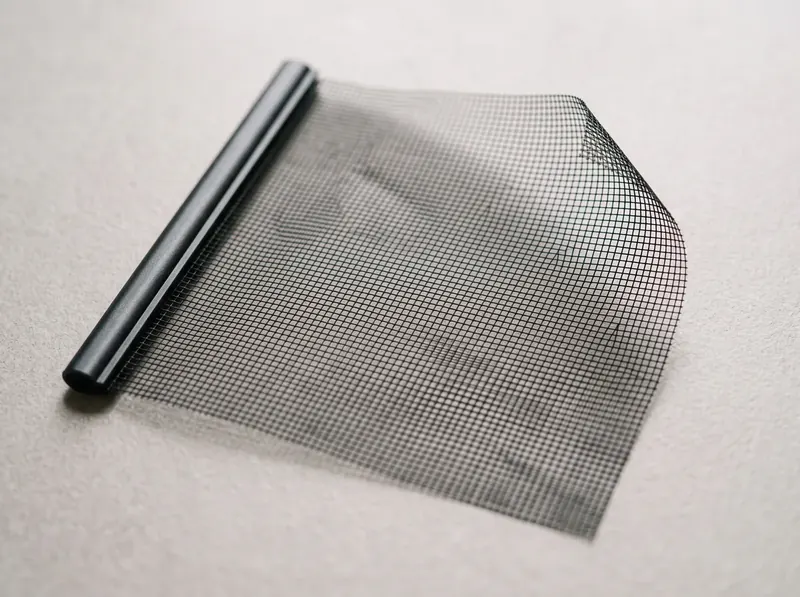
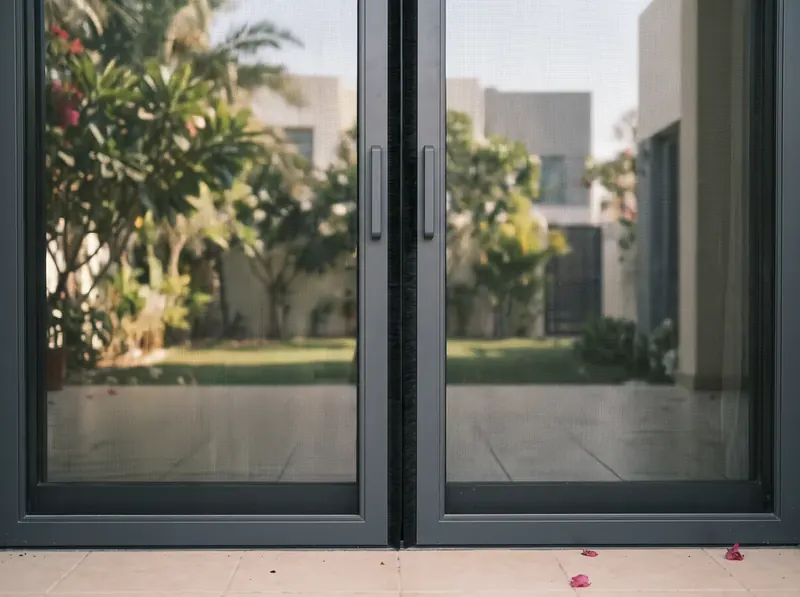
Open, it folds into a slim cassette at the side. Closed, the mesh has a 0.8 × 0.8 mm cell and dims the view a little.
Double Centra on a large sliding door starts from AED 1,550 and sliding panels on a very wide opening from AED 810. Proxima and Corner on a glass wall are priced at the free survey.
Proxima folds to one side and suits a wall that opens from one end. Double Centra folds to both jambs and meets in the middle, like doors that part in the centre.
Yes. It is powder coated in the RAL colour of your frames, and colours outside the standard range cost AED 250 per running metre.
Yes. Proxima is made for sliding, lift and slide and folding doors. The measurer checks the floor line for the low track.
We reply on WhatsApp with the price and the screen that fits.