AAnderson AteufackGoogle★★★★★
“The roller mechanism on our existing net broke. They replaced it with a new upgraded system that rolls smoother and locks in place better. Much better than the original.”
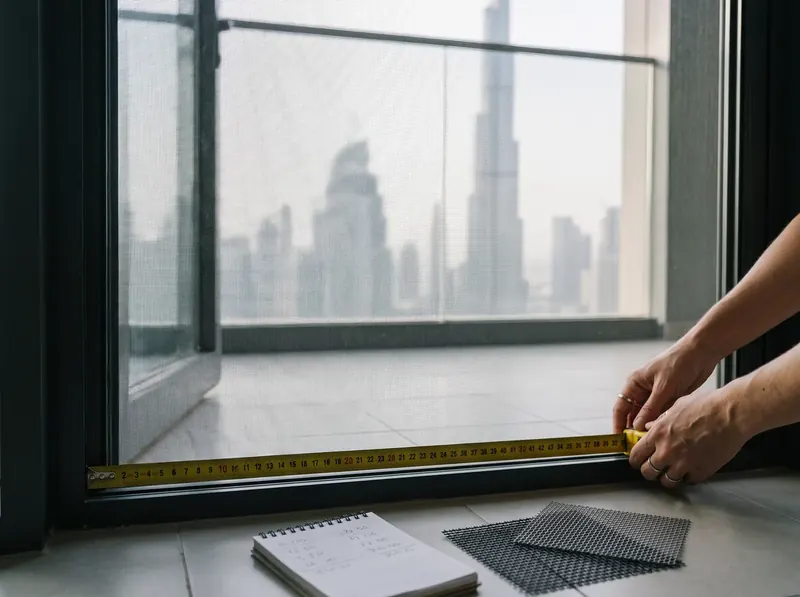
Measure inside the frame in millimetres: width at the top, middle and bottom, height at the left, centre and right. Keep the smallest of each, check both diagonals and note how much flat frame surrounds the opening. Send the figures with two photos on WhatsApp for a first price. Our measurer checks it all again, free anywhere in Dubai.
 Andrei Moroz · Head of installation
Hold the tape where the air comes in, frame edge to frame edge. The size of the glass tells us nothing about the screen.
Top, middle and bottom. A frame that bows by a few millimetres shows up here, and the smallest figure is the safe one.
Left, centre and right. On a door, start at the threshold inside the frame, not at the floor tiles next to it.
Corner to corner, both ways. Two different figures mean the opening is out of square, and the measurer needs to know.
How much flat frame runs round the opening, and where handles, locks, blinds or a sill stick out.
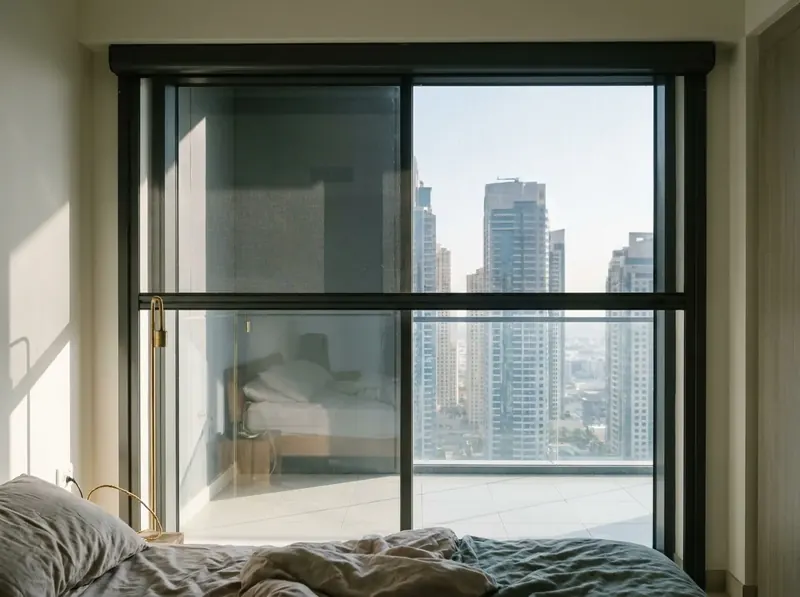
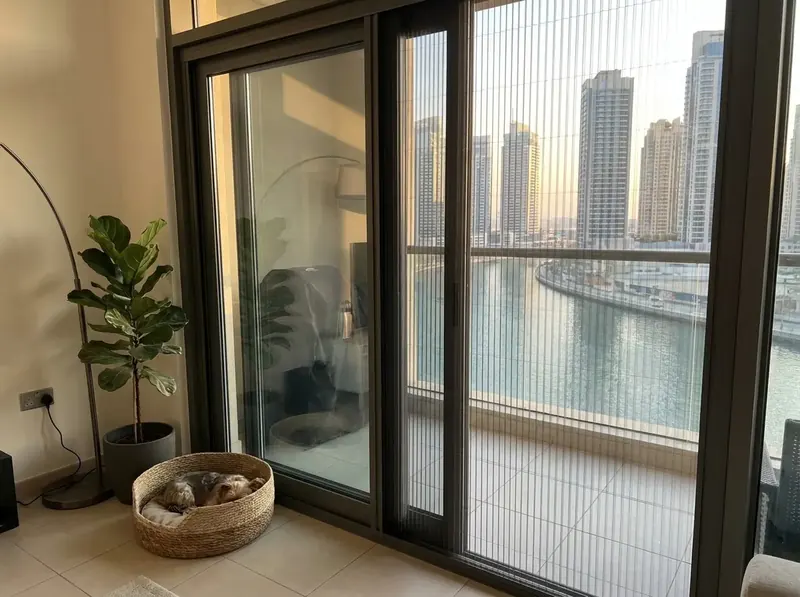
Are your three widths within a few millimetres of each other?
The frame is straight. Your figures will be close to ours.
The frame bows. Send all three figures, and the measurer decides how the screen sits.
Do the two diagonals match?
The opening is square, and any system can go in.
It is out of square, common in plastered villa walls. The screen is made to the real shape, so tell us before the visit.
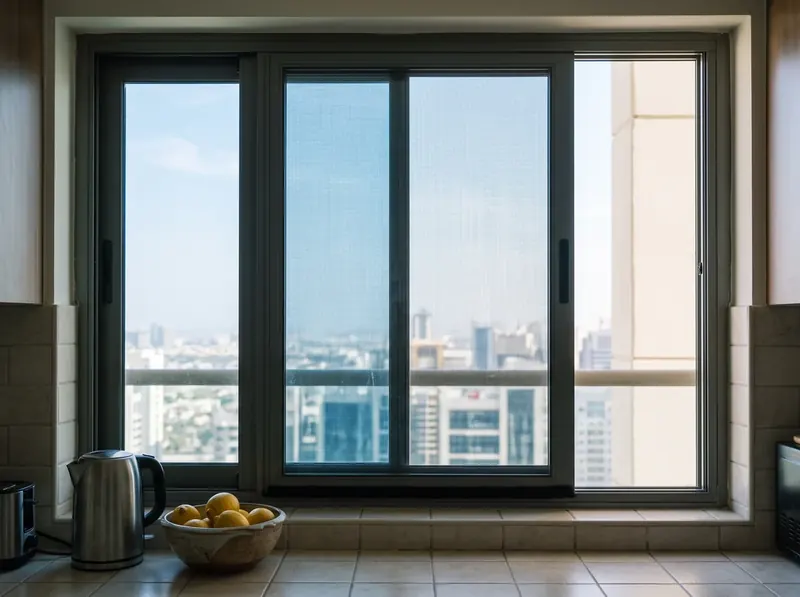
Is the outer channel of your sliding track empty?
A sliding screen can run there. Add a photo of the track from above.
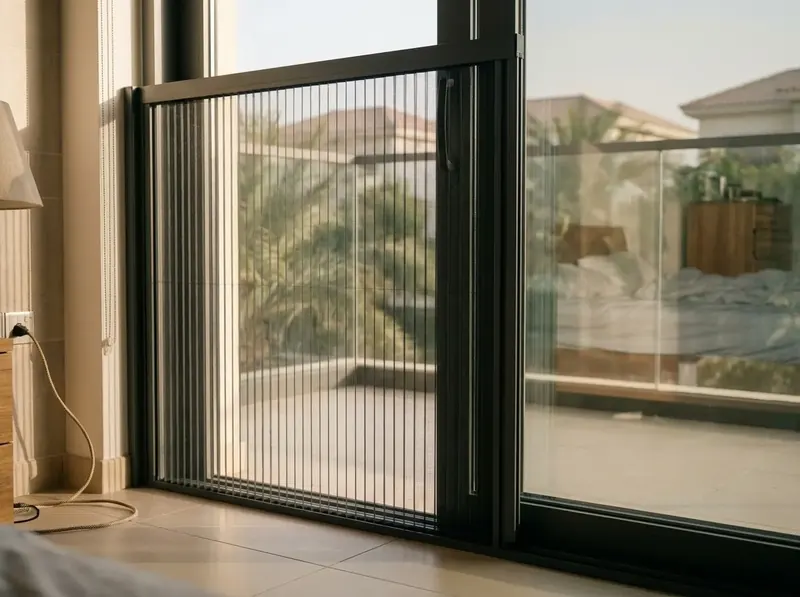
A pleated or fixed frame screen fits better. Measure the clear opening instead.
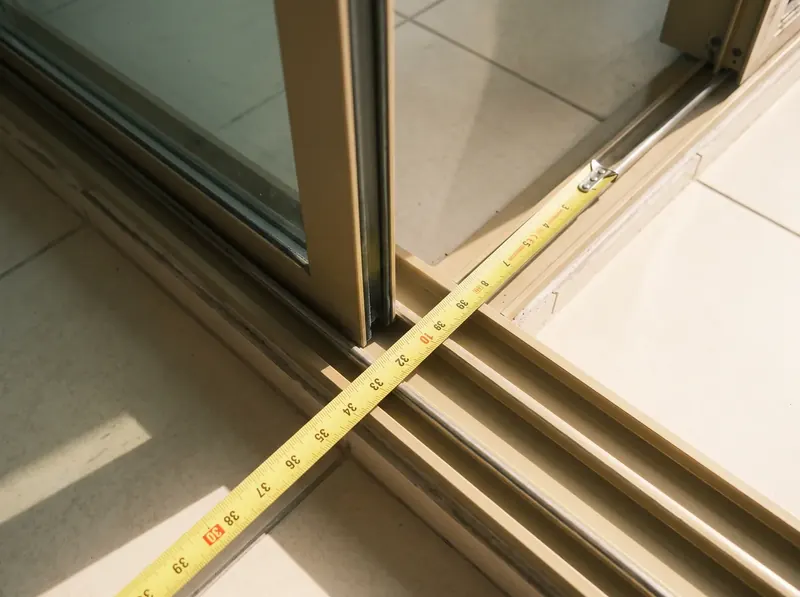
For a sliding balcony door, photograph the bottom track from above. The spare channel, if there is one, decides between a sliding screen and a pleated one with its own low track.
For French or double doors, measure across both leaves as one opening and note which way each leaf swings. A pair of pleated screens meeting in the middle is sized on the whole width.
Pick the screen, then set the width and height you measured.
Screens priced per m² are counted on area. A window of 1,200 by 1,500 mm is 1.2 × 1.5 = 1.8 m², so standard mesh at AED 400 per m² gives AED 720 before the survey.
We never build from your figures alone. The measurer decides where the profile sits, on the frame or inside the opening, and that moves the size more than a tape error.
Some openings need the measurer from the first step.
A pleated profile is chosen by the ratio of height to width, so wide openings are sized on site.
The shape needs several points or a template. Send photos and we come with the right tools.
A low bottom track needs a level line, and only a check on site shows where it runs.
Prices from our list, made to measure and fitted.
“The roller mechanism on our existing net broke. They replaced it with a new upgraded system that rolls smoother and locks in place better. Much better than the original.”
“Added nets to all winds and doors throughout the houset was a big job, but they completed in one day. Team of workers, very effiant. Photos attached.”
“Quick installation of nets in the kids! room. They were careful not to wake the baby during nap time = very considerate. Small jeb but they treated it with the same care es a big project.”
Millimetres. Screens are cut to the millimetre, and a figure rounded to the centimetre can leave a gap a mosquito finds.
The clear opening, frame edge to frame edge where the air comes in. The measurer adds whatever overlap the chosen system needs.
There is no single standard. Towers and villas by different developers use different frames, and even two windows in one flat can differ, so every screen is made to measure.
No. Your sizes give a first price on WhatsApp. The screen is built from our survey, so the final size is our responsibility.
Measure the full width across both leaves and the height from the threshold, at three points each. Note which way each leaf swings and where the handles are.
Yes, anywhere in Dubai. The measurer brings mesh samples, names the exact price on the spot, and fitting follows in 3 to 5 days.
We reply on WhatsApp with the price and the screen that fits.
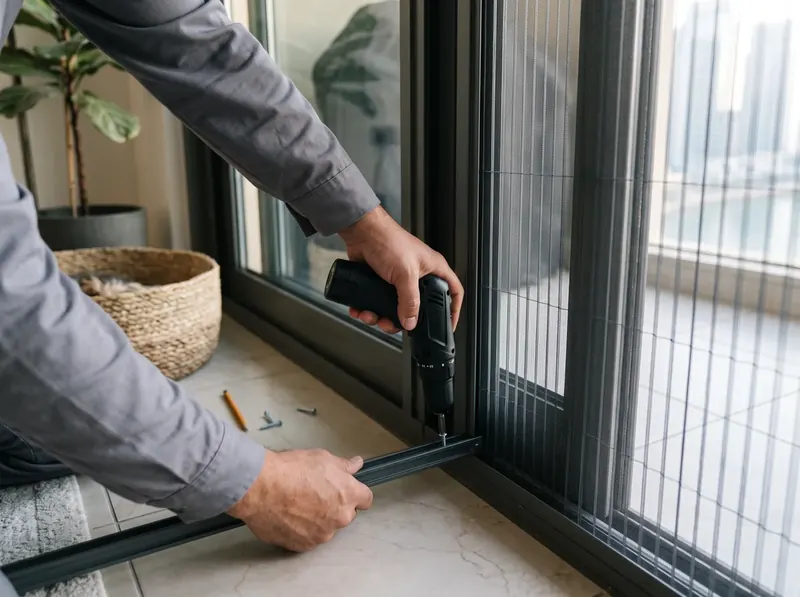
Installation · Dubai
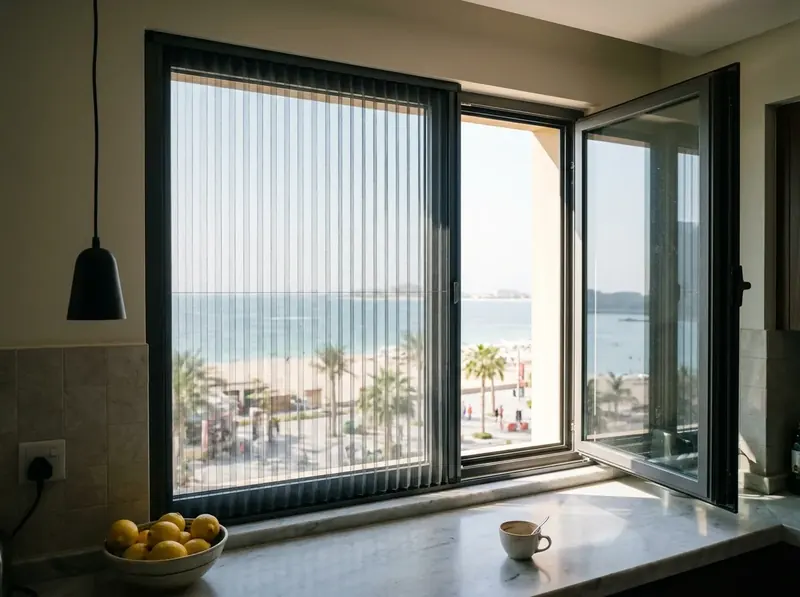
Window screens · Dubai
Price list · September 2026
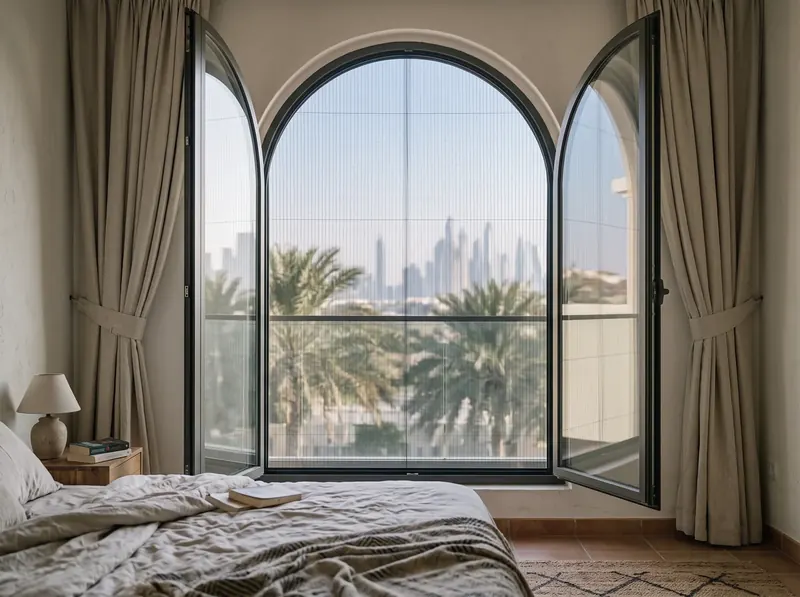
Odd-shaped windows · Dubai
Guide · Choosing
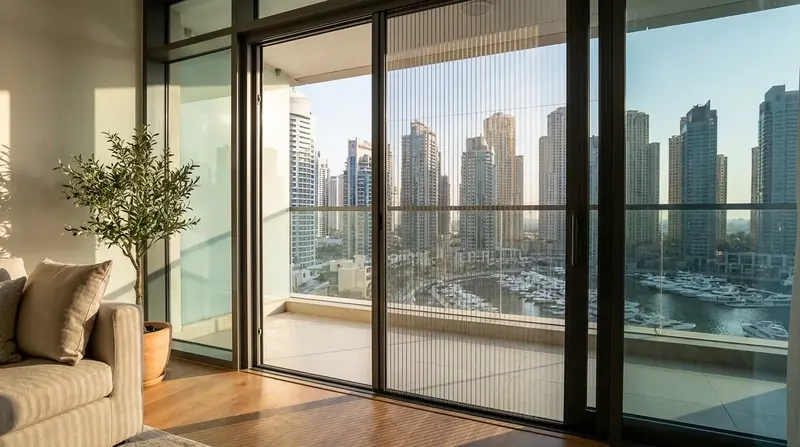
Guide · Prices