AAnderson AteufackGoogle★★★★★
“The roller mechanism on our existing net broke. They replaced it with a new upgraded system that rolls smoother and locks in place better. Much better than the original.”
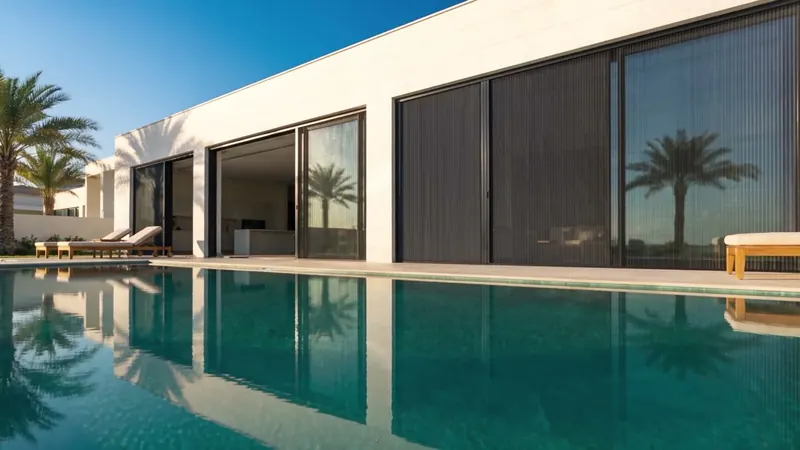
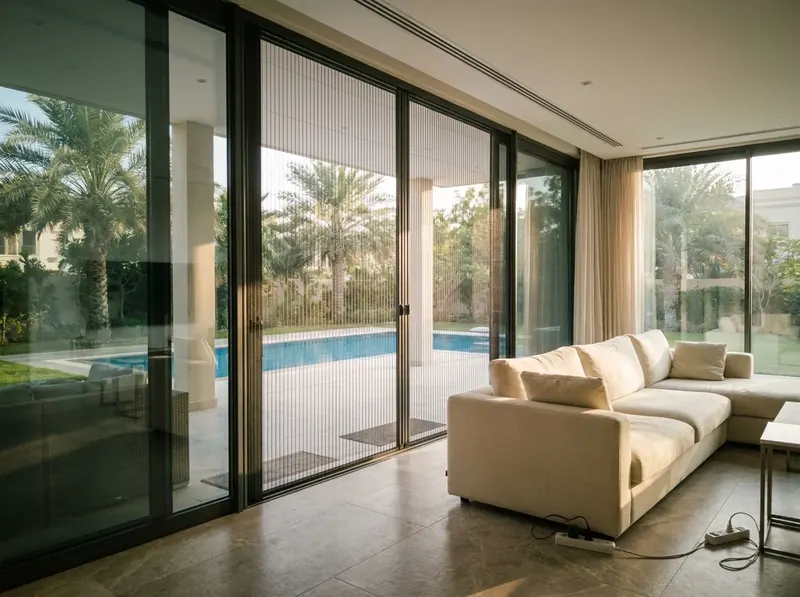
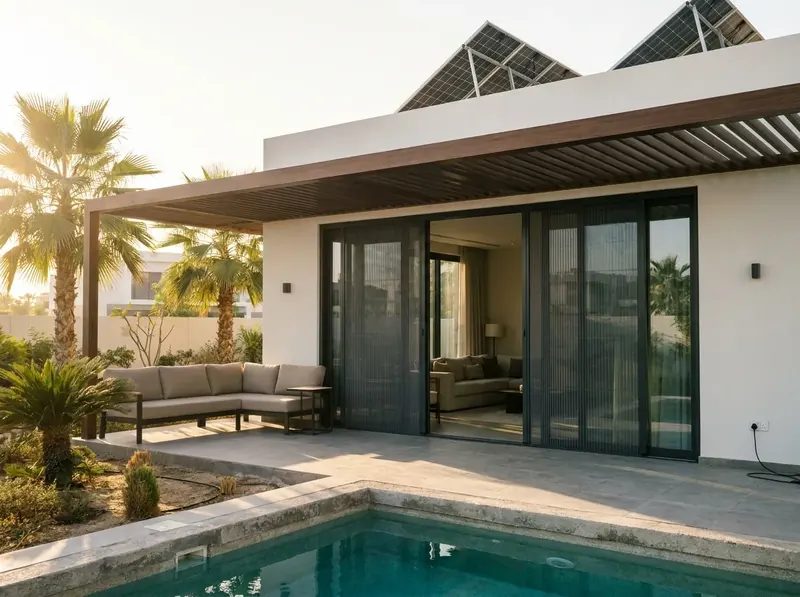
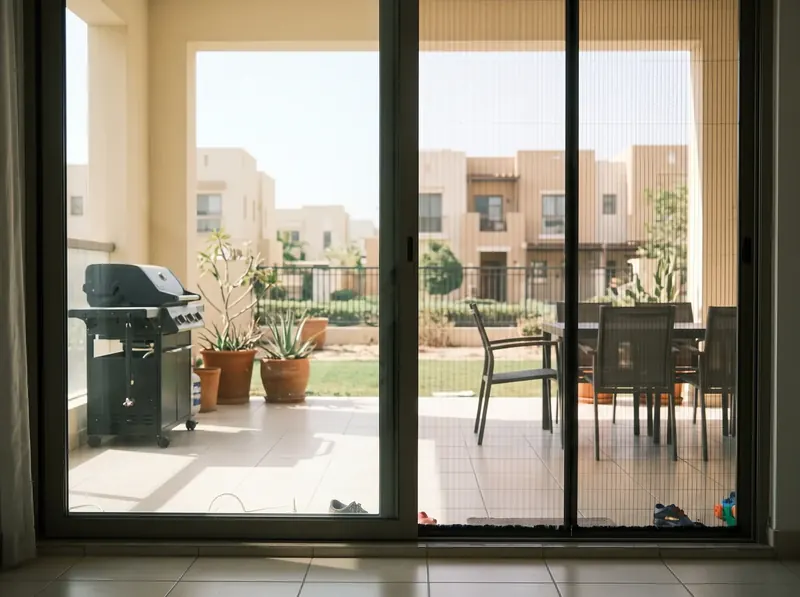
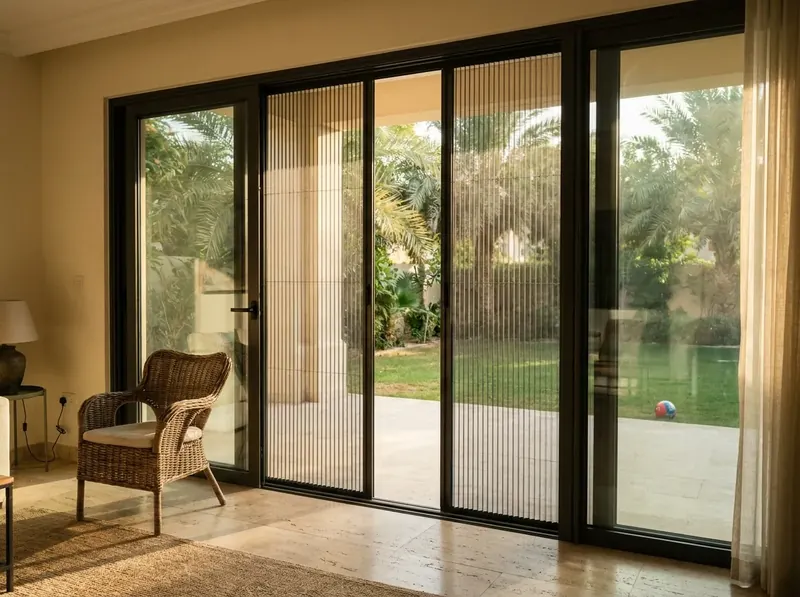
In a Dubai apartment the job is a sliding balcony door and a few windows: a pleated or sliding screen on the door, roll-up or frame screens on the windows. A villa adds wide terrace glass, a kitchen exit to the garden and more openings facing grass and water, so it needs wider pleated systems and hinged screen doors.
 Andrei Moroz · Head of installation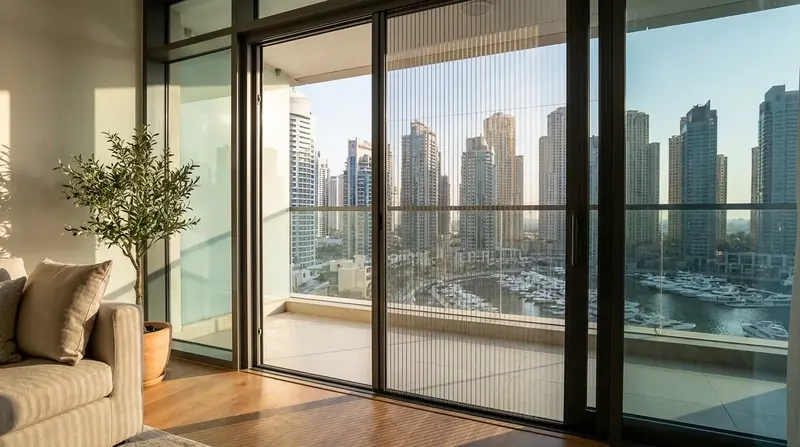
| Opening | Apartment | Villa |
|---|---|---|
| Sliding door to outside | Balcony door: Centra or Uno, AED 1,550 | Glass wall: Proxima or Double Centra, up to 8 m |
| Corner opening | Corner balcony: PVL Corner | Corner terrace with no post: PVL Corner |
| Small window | Kitchen or bathroom: Vertica, up to 1.5 × 1.5 m | The same, plus maid's room and laundry |
| Bedroom window | Roll-up at AED 1,000 per m² or a fixed frame at AED 400 per m² | The same, denser mesh near grass and water |
| Door used all day | Balcony door: pleated, low flat track | Kitchen to garden: hinged door with a closer |
Pleated window screens start from AED 380. Corner terraces and glass walls get a price on the free survey.
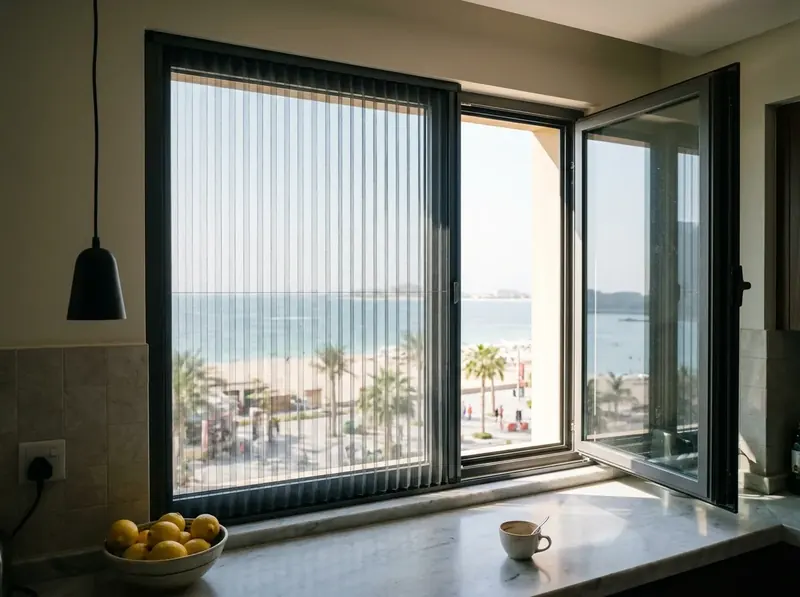
High floors catch strong wind off the sea and the desert. Pleated and roll-up screens fold or roll away when open, so nothing flaps on the balcony in a shamal.
Many towers want work in a unit cleared with building management first. Screens fitted inside the frame and powder coated in its RAL colour leave the facade looking the same.
Do you have a garden, a pool or a lawn with sprinklers?
Screen every door to the garden and the ground floor windows first.
Start with the balcony door and the bedrooms.
Is any glass opening wider than 3.5 m?
It needs Proxima or Double Centra, which PVL makes up to 8 m wide.
Single pleated screens or sliding panels will do.
Does a cat or a dog go in and out?
Pet mesh at AED 800 per m² on the doors they use.
Standard mesh at AED 400 per m² covers the house.
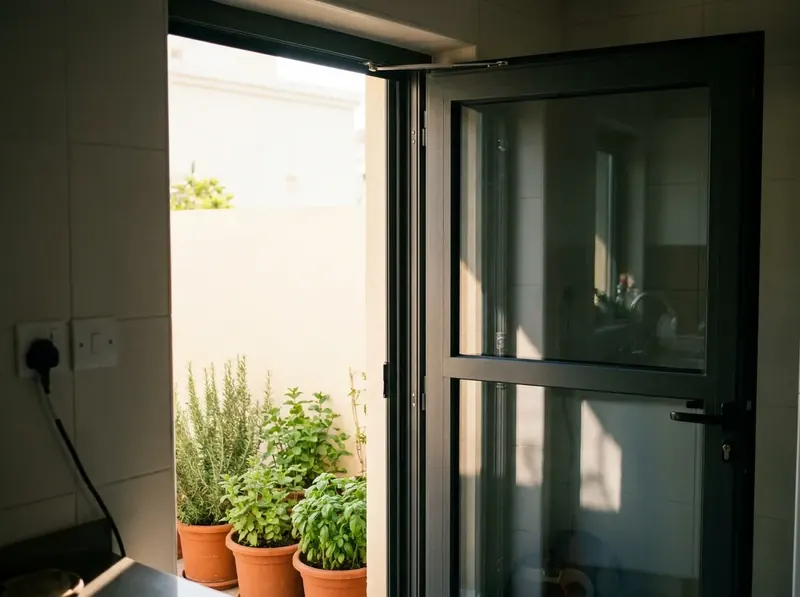
A villa has more openings at ground level, and most face grass, a pool or watered beds. That is where mosquitoes breed, so the garden side of the house comes first.
The kitchen exit opens all day with full hands, so a hinged screen door on a closer suits it. Wide terrace glass takes Proxima: PVL makes it up to 8 m wide.
Tap an opening. Standard mesh, made to measure and fitted.
Both homes go wrong in the same few ways.
A pleated screen on a window you never open is money spent for nothing. A fixed frame at AED 400 per m² does that job.
Garden and balcony doors stand open longest in the evening. Doors first, then the bedroom windows.
Every profile is powder coated in a RAL colour, so ask for the colour of your frames across the whole house.
“The roller mechanism on our existing net broke. They replaced it with a new upgraded system that rolls smoother and locks in place better. Much better than the original.”
“Added nets to all winds and doors throughout the houset was a big job, but they completed in one day. Team of workers, very effiant. Photos attached.”
“Quick installation of nets in the kids! room. They were careful not to wake the baby during nap time = very considerate. Small jeb but they treated it with the same care es a big project.”
Ask building management first. Some towers want a permit or NOC for any work in a unit; screens inside the frame and in its colour leave the facade unchanged.
Yes, with the landlord's agreement, since screens are fixed to the window or door frame. Send the landlord our quote and photos of the openings before the survey.
It depends on the number and size of the openings: windows from AED 380, French doors from AED 810, a pleated patio door AED 1,550. The free survey gives a full quote.
On a windy balcony door, reinforced mesh at AED 600 per m² holds its shape better than standard. The measurer suggests it where the wind is strong.
Yes. Profiles are powder coated in the RAL colour of your frames. Repainting existing screens is AED 250 per running metre.
Doors to the garden and pool, then bedroom windows. Those are the openings used in the evening, when mosquitoes are out.
We reply on WhatsApp with the price and the screen that fits.