AAnderson AteufackGoogle★★★★★
“The roller mechanism on our existing net broke. They replaced it with a new upgraded system that rolls smoother and locks in place better. Much better than the original.”
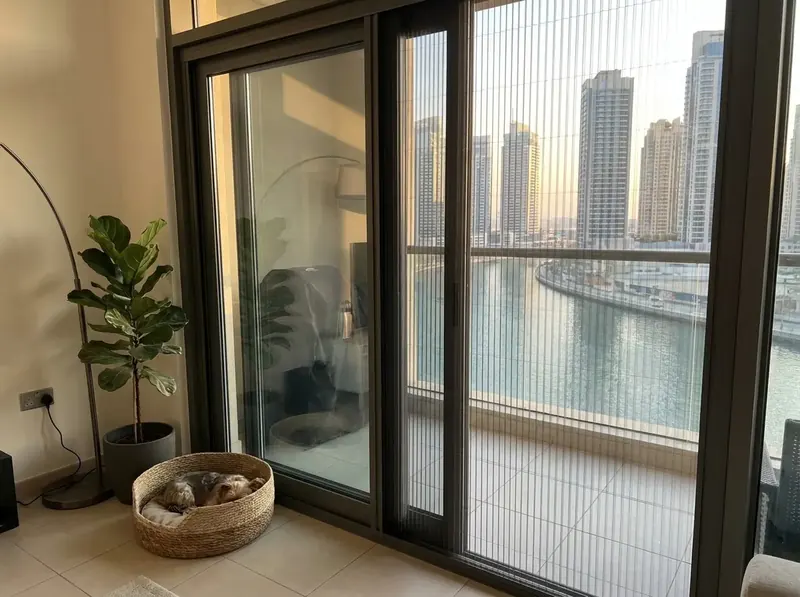
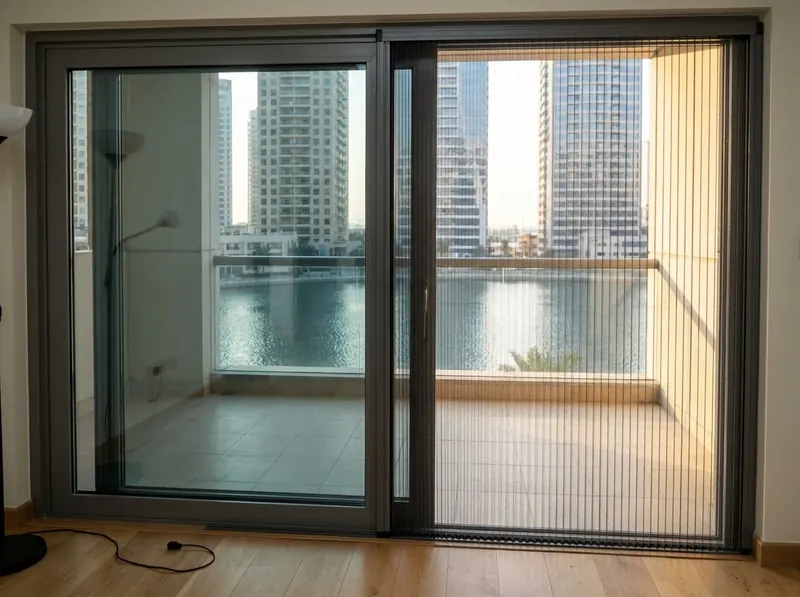
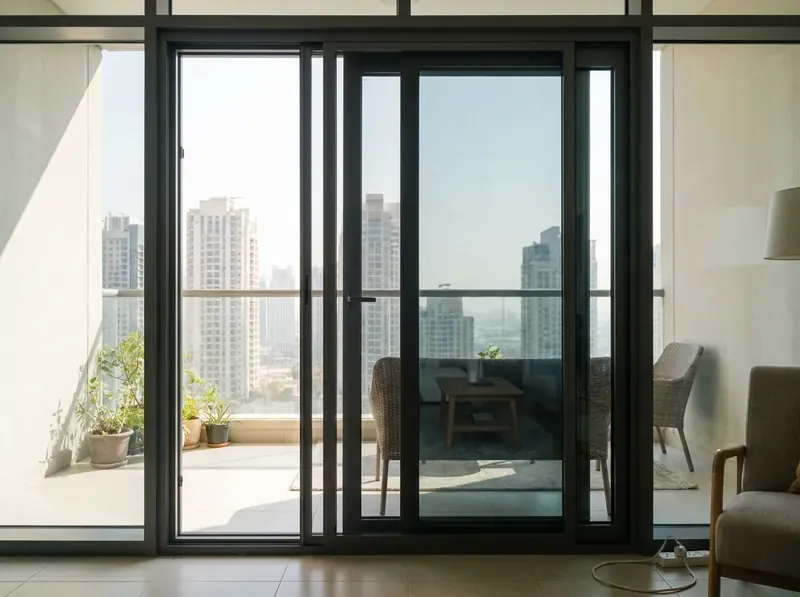
Yes, mosquitoes reach high floors, so the balcony door needs a screen that is fixed into the frame: a pleated screen with a magnetic catch at AED 1,550 per door, or a sliding screen in its own track from AED 670. Skip anything on tape, fold the mesh away in a shamal, and never treat it as a fall guard.
 Andrei Moroz · Head of installation
Fewer of them fly that high, but they do get there. They ride up in lifts and stairwells, and they breed in plant saucers and air conditioner drip trays on the balcony itself.
On upper floors the balcony door is the main way in, because it stays open longest. One screen there often solves most of the flat.
| Screen | How it is held | On a windy floor |
|---|---|---|
| Pleated screen | Screwed to the frame, mesh in guides | Good, fold it away in a shamal |
| Sliding screen | Own track, top guide | Good while the track is clean |
| Hinged screen door | Hinges and a closer | Draughts swing it, the closer holds it |
| Magnetic curtain on tape | Adhesive strip round the frame | Billows, parts in gusts, tape lets go |
The measurer checks the door frame and the wind side of the tower before choosing the system.
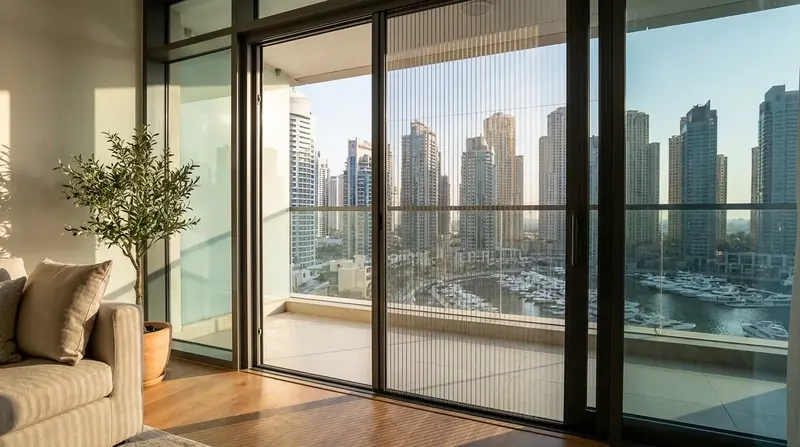
Higher up, gusts hit the facade harder and a closed mesh catches them like a small sail. Tape and soft curtains give way first, then loose fixings.
When a shamal is forecast, fold the mesh into its cassette and close the glass. The screen lasts longer, and the sand stays outside the flat.
Could a child or a pet lean on the screen?
Fit a child lock on the balcony door and keep furniture away from the railing. The mesh will not hold their weight.
Still treat the mesh as an insect barrier only.
Has building management cleared contractors for your flat?
Book the visit.
Ask first. Some towers want contractor details before any work inside.
Does your balcony door face the open sea or the desert side?
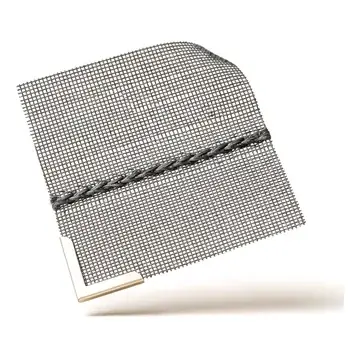
Ask about reinforced mesh. Exposed sides take the most wind.
Standard mesh at AED 400 per m² is usually enough.
Straight answers on safety.
Mesh stops insects. It will not hold a child or a pet leaning on it. Window restrictors and door locks do that job.
Mesh round the whole balcony changes the facade and needs the building's consent. A screen in the door frame changes nothing outside.
In a strong gust a closed mesh takes a load it was not made for. Fold it away.
Systems held in the door frame.
“The roller mechanism on our existing net broke. They replaced it with a new upgraded system that rolls smoother and locks in place better. Much better than the original.”
“Added nets to all winds and doors throughout the houset was a big job, but they completed in one day. Team of workers, very effiant. Photos attached.”
“Quick installation of nets in the kids! room. They were careful not to wake the baby during nap time = very considerate. Small jeb but they treated it with the same care es a big project.”
Yes. They come up in lifts and stairwells and breed in water on balconies, such as plant saucers and air conditioner drip trays.
A curtain on tape can. A pleated screen is screwed into the frame with its mesh in guides, and you fold it away in strong wind.
No. Mesh keeps insects out and will not hold a child's weight. Use a child lock on the door and window restrictors.
Not always. On balcony doors that face open sea or desert, reinforced mesh at AED 600 per m² holds its shape better in the wind.
The screen sits inside your frame, but some buildings want contractor details before work. Ask building management first.
Hardly. The profile is powder coated in the RAL colour of your frames and sits inside the door frame.
We reply on WhatsApp with the price and the screen that fits.