AAnderson AteufackGoogle★★★★★
“The roller mechanism on our existing net broke. They replaced it with a new upgraded system that rolls smoother and locks in place better. Much better than the original.”
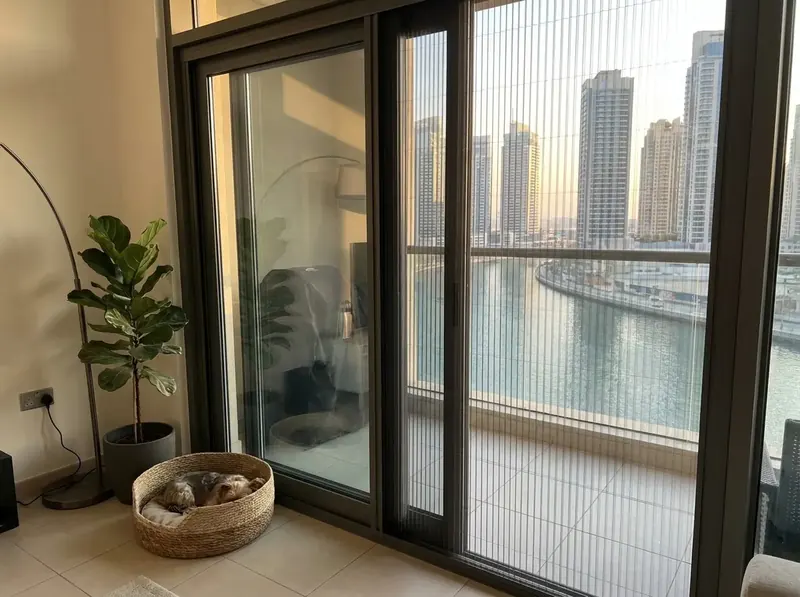
Pick by the opening. A pleated mosquito screen folds into a side cassette over a low flat track and suits doors you walk through all day. A sliding screen is a flat panel on its own rail, the cheapest fit for sliding windows. A roll-up screen winds into a box above a window and costs AED 1,000 per m².
 Andrei Moroz · Head of installation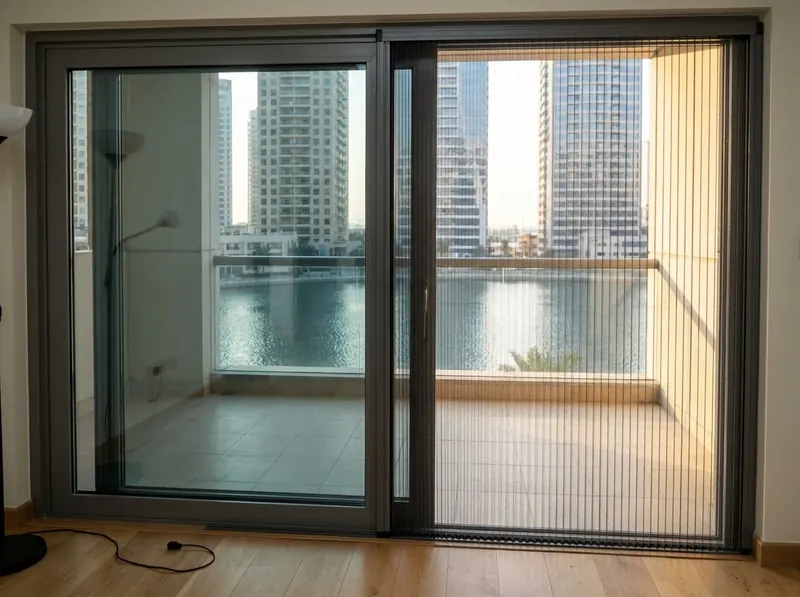
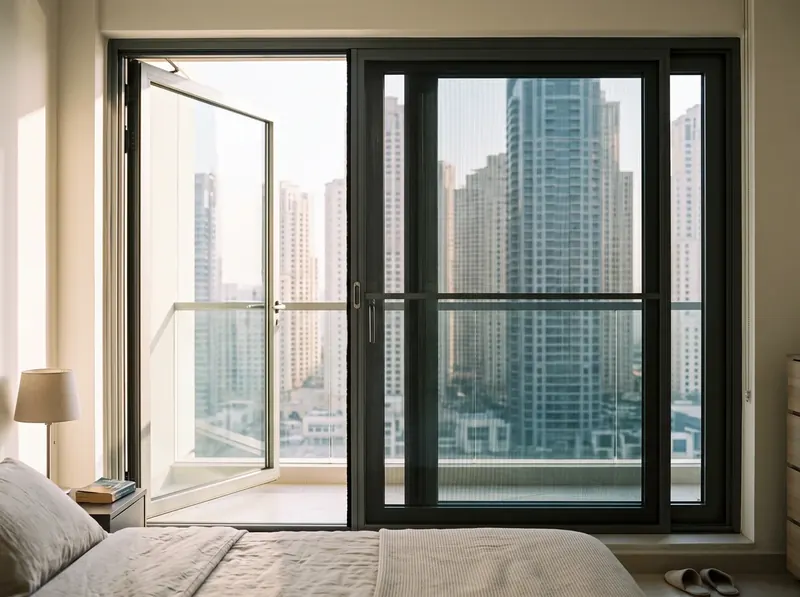
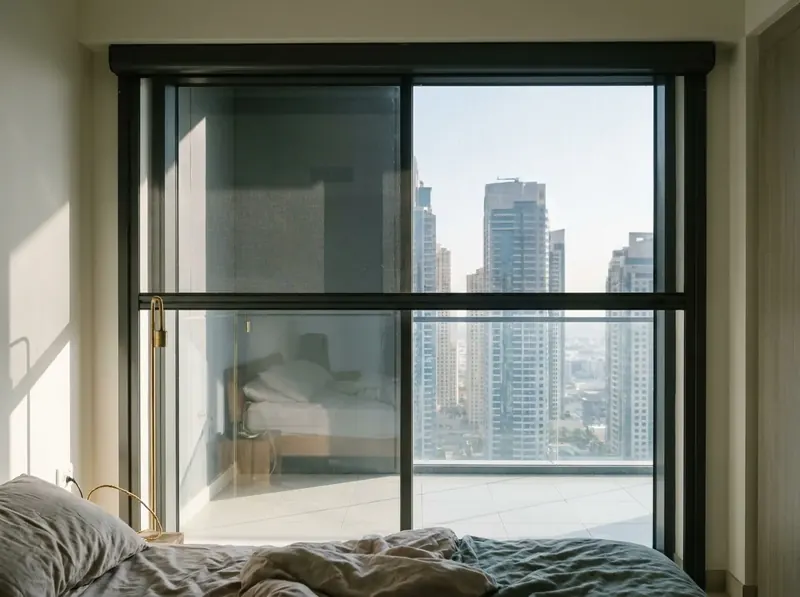
Is this a door the family walks through all day?
Take a pleated screen. It opens with one pull and leaves only a low flat track at your feet.
A sliding panel does the job on a door you open in the evening for air, and it costs less.
Is it a window you open every day?
A roll-up screen hides in its box, or a pleated one folds to the side. A sliding window can also take a sliding screen from AED 380.
A fixed frame at AED 400 per m² is the simple answer for a window you rarely open.
Is the glass opening wider than 3.5 m?
Look at pleated Proxima or Double Centra: PVL makes them for openings up to 8 m wide.
One pleated screen or one sliding panel usually covers it.
| Pleated | Sliding | Roll-up | |
|---|---|---|---|
| Opening it | Pull the bar, the mesh unfolds | Push the panel along its rail | Pull the bar down from the box |
| At your feet | Low flat track | Bottom rail with rollers | Nothing, it sits on a window |
| When open | Folded at the side, glass clear | Covers the fixed glass leaf | Rolled away in the box |
| Cleaning | Vacuum in place with a soft brush | Lift out, wash, vacuum the rail | Wipe in place before rolling up |
| Widest opening | Up to 8 m with Proxima | Made to measure | Made to measure |
| Weak spot | Cords need a clean track | Sand in the rail, panel jumps out | Spring tires if the bar flies up |
Pleated widths are PVL limits. The ratio of height to width sets the real maximum, and the measurer checks it on site.
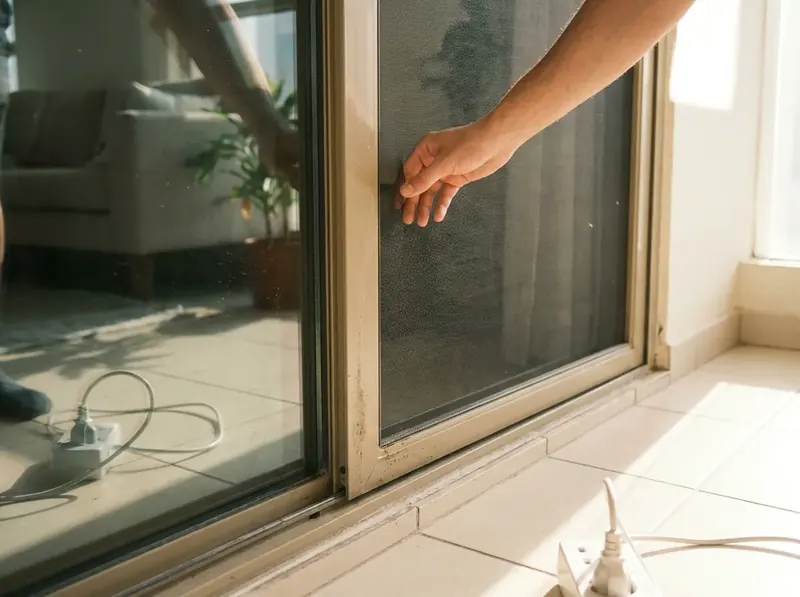
In Dubai adverts a sliding fly screen can mean a pleated screen that runs in its own track, or a flat framed panel on rollers. Ask which one a quote means before you compare prices.
On the same balcony door a pleated screen costs AED 1,550 and a sliding panel starts from AED 670. The pleated one folds out of sight; the panel always sits over part of the glass.
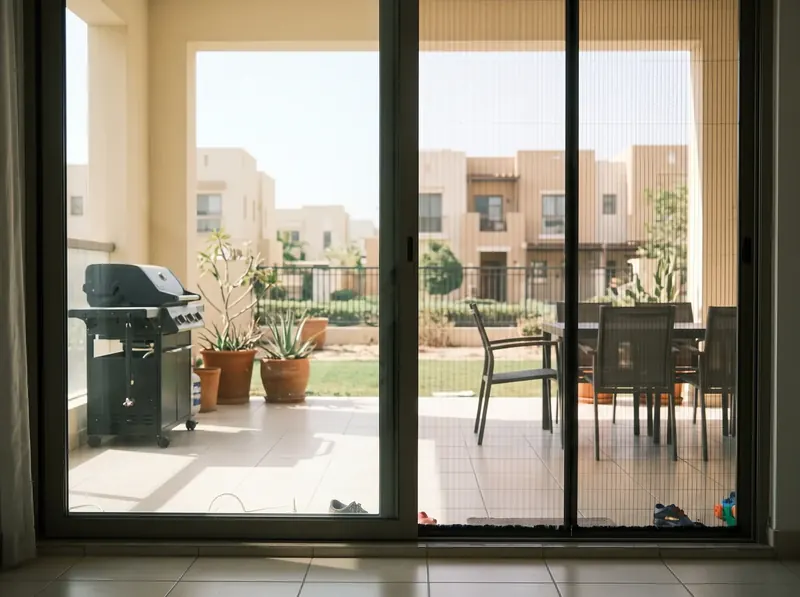
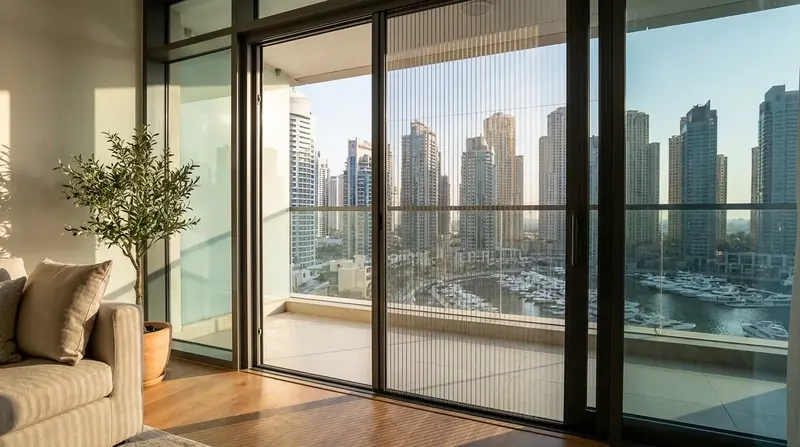
Balcony doors in Marina, JLT and Business Bay towers are mostly sliding aluminium doors. With room beside the glass, a sliding panel is the budget choice; a door used all day suits pleated.
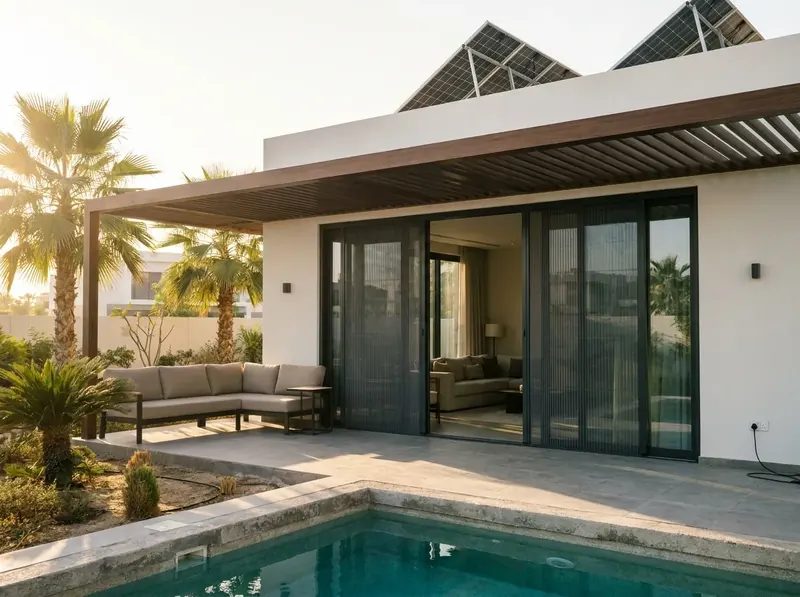
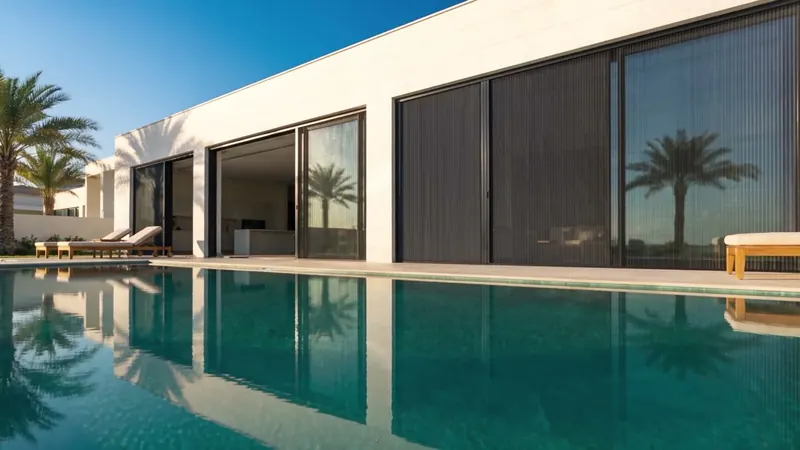
Garden doors in Arabian Ranches or Dubai Hills are wider and busier: children, guests, trays out to the barbecue. Pleated Double Centra or Proxima keeps the threshold almost flat and the whole width open.
Tap your opening. Standard mesh, made to measure and fitted.
Some openings need another kind of mosquito screen.
Pleated and roll-up mesh is light and gives under claws. Pet mesh at AED 800 per m² goes into a rigid frame or a hinged door.
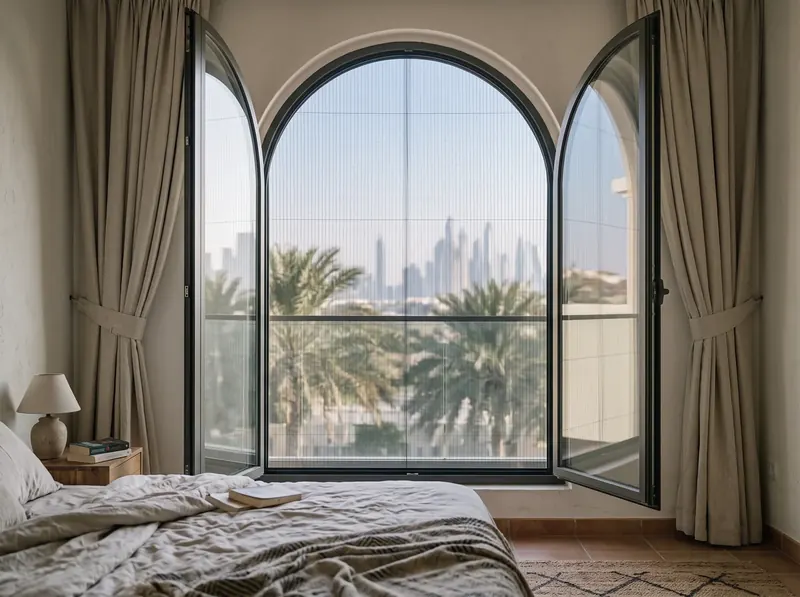
Folding and rolling systems need a rectangle. A custom-shape frame is cut to the curve after the survey.
A hinged screen door with a closer, from AED 810, swings shut behind you. There is no bar to pull.
“The roller mechanism on our existing net broke. They replaced it with a new upgraded system that rolls smoother and locks in place better. Much better than the original.”
“Added nets to all winds and doors throughout the houset was a big job, but they completed in one day. Team of workers, very effiant. Photos attached.”
“Quick installation of nets in the kids! room. They were careful not to wake the baby during nap time = very considerate. Small jeb but they treated it with the same care es a big project.”
For a door, usually yes. A pleated screen stops wherever you leave it and runs on a low flat track, while a roller screen springs back into its box and is built for windows.
Pleated, at AED 1,550 per door, if the door is used all day. A sliding panel from AED 670 suits a door opened now and then, when the frame has room beside the glass.
Pleated and sliding window screens start from AED 380. Fixed frames cost AED 400 per m² and roll-up screens AED 1,000 per m², so a roll-up screen on a 1.5 × 1.2 m window is AED 1,800.
A single screen folds to one side of the opening. A double one, such as Double Centra, is two screens that meet in the middle, for wide sliding doors and French doors, from AED 810.
None is sand-proof; all three need a clean track. Pleated and roll-up screens are cleaned in place, while a sliding panel lifts out and its rail needs a vacuum after a shamal.
Yes. A common mix is pleated on the balcony or garden door and roll-up or fixed frames on the windows, all powder coated in the RAL colour of your frames.
The same for all three types: 5 years on the frame, 2 years on the mechanism and 2 years on fitting.
We reply on WhatsApp with the price and the screen that fits.