Mosquito Nets in Al Khan
Al Khan is wedged between the sea and the lagoon, with water on both sides. For a screen that means salt in the air, higher humidity and accelerated ageing of any cheap metal in the construction.
01SALT WORKS ON METAL ALL YEAR
It settles together with the damp. Fibreglass mesh takes it calmly, while cheap-alloy hardware starts to seize.
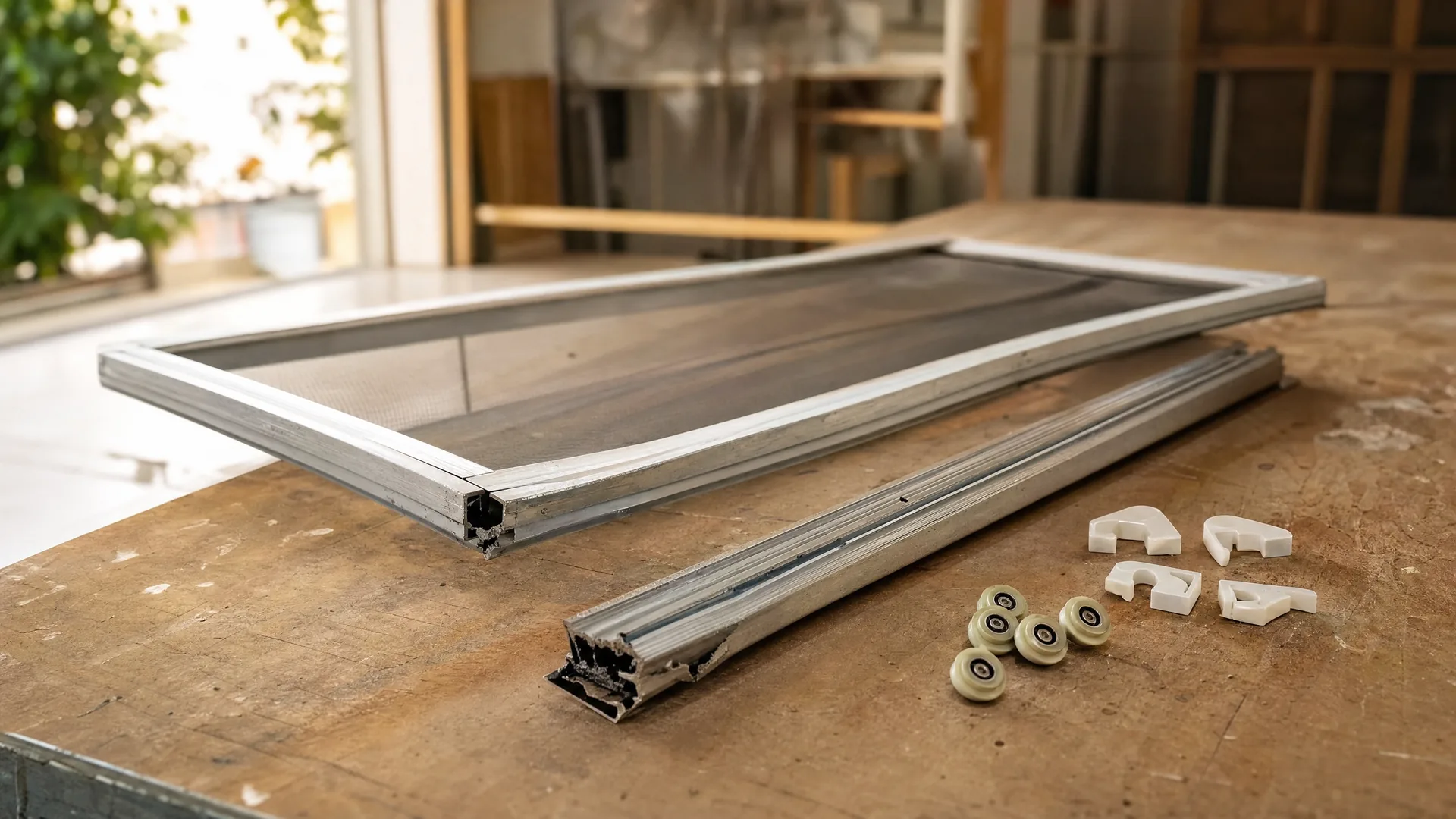
02SEIZED ROLLERS AND CATCHES COME FIRST
Second are fixings weakened by corrosion. The rule for this district is simple: anything made of cheap alloy will need replacing before the screen itself.
03THE MESH FADES ON THE SUNNY SIDE
On the shaded side it lasts noticeably longer, and the edge shows it. The difference between sides of a building is greater here than inland.
04WHAT TO ALLOW FOR IN THE VISIT
- Access to the blocks is usually open; a warning is enough
- Parking by the corniche is taken in the evening and at weekends
- A visit to Sharjah is set for a specific day
- We try to group addresses into one trip
What is built here
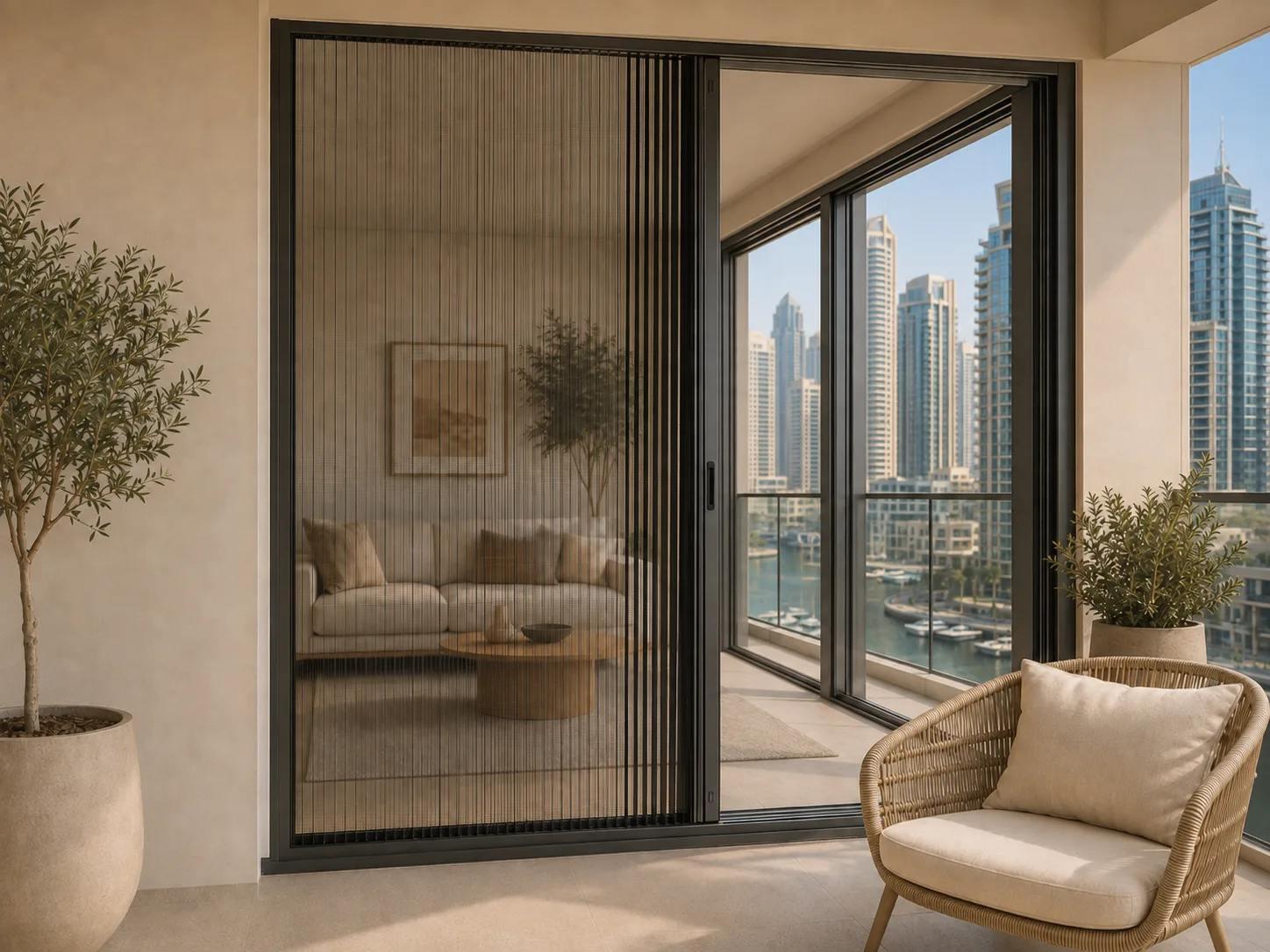
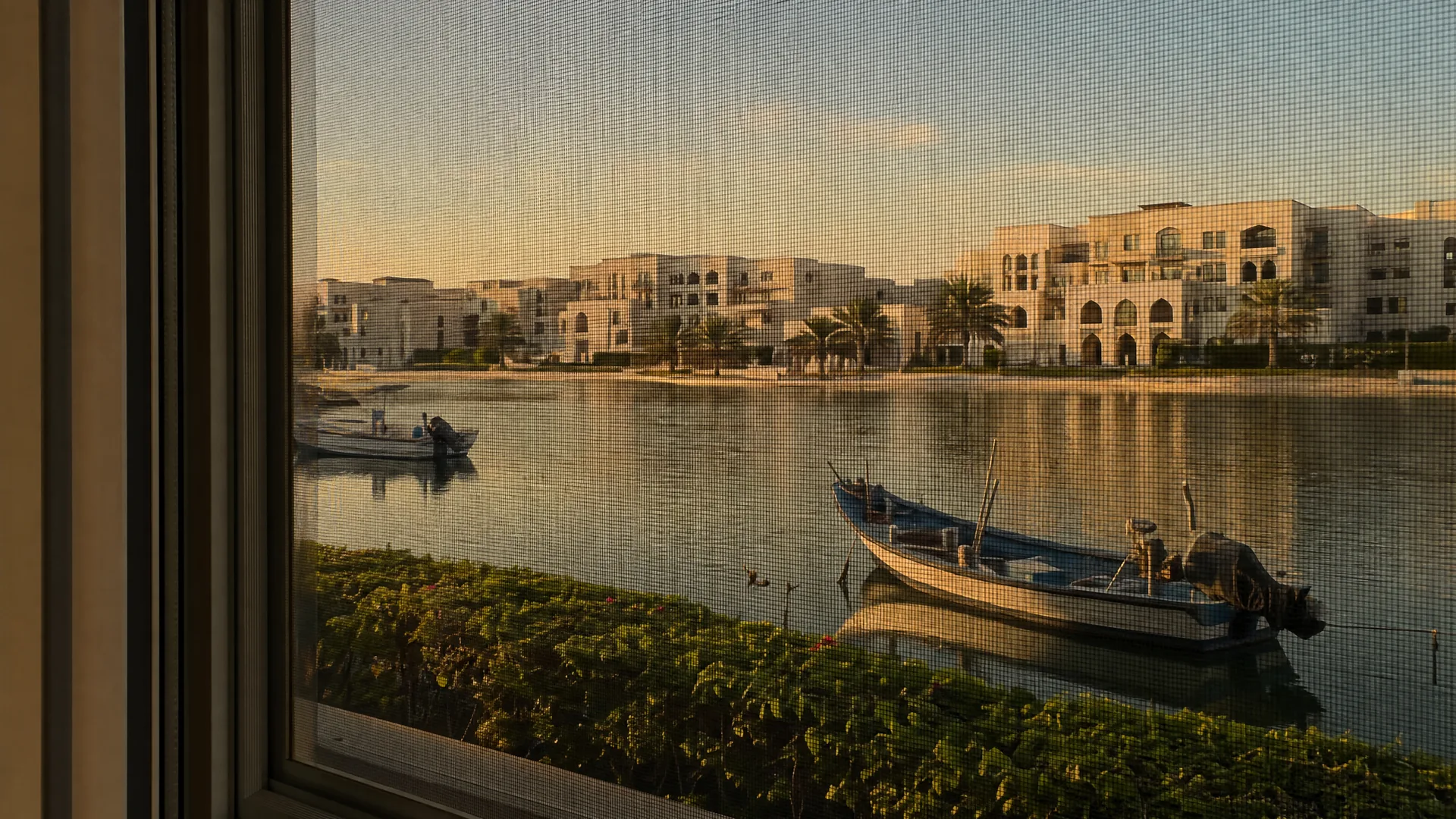
The district takes in a waterfront with residential buildings and quarters running inland. A large part of the building faces the water, and the balconies face it too.
Salt is the defining factor. It settles together with the moisture and works on metal all year. Fibreglass fabric takes that calmly, but hardware in a cheap alloy starts to seize, rollers lose their travel and catches stop holding. The practical conclusion for Al Khan: economising on hardware here comes back as a repair within a couple of seasons.
Second: water on two sides also means more insects, especially on still evenings. When there is wind, meanwhile, it is strong and comes off the sea unobstructed.
Third: the beach nearby means sand on top of the salt. Fabric has to be washed more often, and for the same reason we do not advise the finest aperture here: it clogs within weeks.
Fourth: part of the building stock is old, the frames come from different years, and the fixing is chosen on site.
What we have done here
We do not publish specific addresses. The survey is free.
What can be said usefully: in Al Khan it is worth asking not only about the fabric but about what the hardware is made of. Here that affects service life more than the screen itself.
Getting to you
Access to the buildings is usually unrestricted and flagging the visit is enough. Parking near the waterfront can be full, especially in the evening and at weekends.
We plan Sharjah visits for a specific day and try to combine addresses into one trip.
What breaks here most often
Water on two sides punishes metal. First place goes to seized rollers and catches, second to fixings that have lost their strength to corrosion. Fibreglass fabric holds up better than the hardware here, but fades on the sunny side. The practical conclusion for the district is simple: anything made of a cheap alloy will need replacing before the screen itself does.
Common questions
Why have the rollers stopped running?
Salt and moisture by the sea. Rollers are a consumable and they get replaced.
Which fabric by the sea?
Not the finest: it clogs with sand within weeks. Easy washing matters more.
Is stainless worth taking?
By the water it behaves better than fibreglass and does not fear ultraviolet.
Is a pass needed?
Usually not; flagging the visit is enough.
How often should the screen be washed?
By the beach, more often than inland. There is no exact rule; go by how transparent the fabric still is.
[ FROM SURVEY TO FITTING ]
GET AN INSTANT QUOTE
Mosquito nets
that actually work
- 12 years in Dubai
- 2-year warranty
Leave a request and we will check the sizes, the type of opening and put together a tidy solution for your windows, doors or balcony