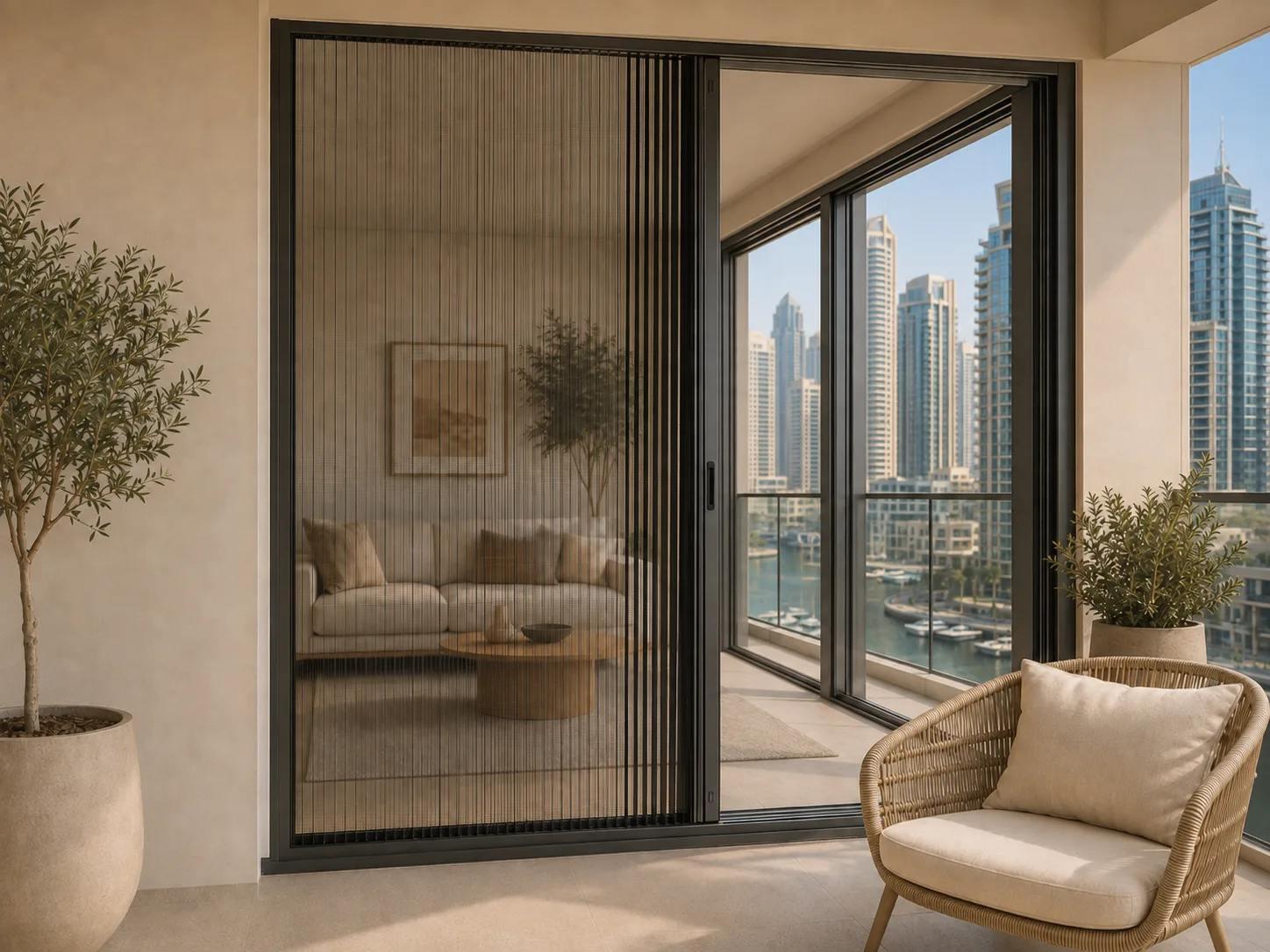
Automatic Mosquito Screens in Dubai
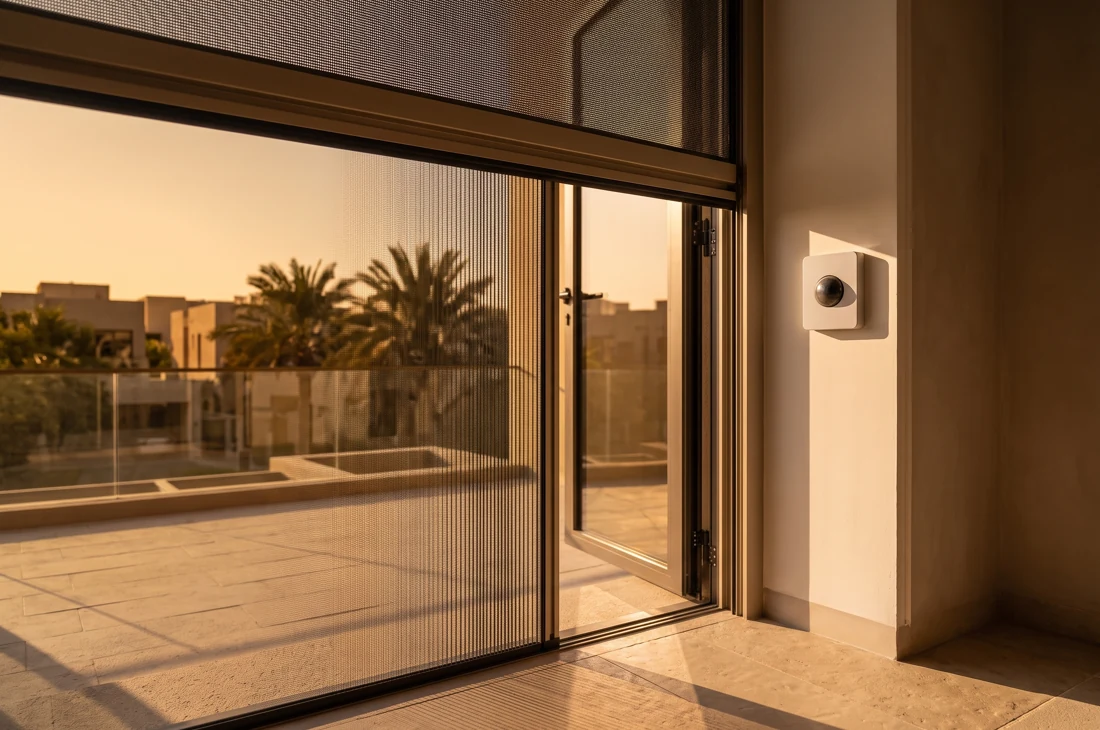
An automatic screen closes itself. You set a threshold by temperature, humidity or air quality, and from then on the system works without anybody touching it: it gets hot, the air conditioning starts, the screen comes down. The motor here is a quiet 24 V unit and it talks to HomeKit, Google Home or Alexa.
01THE SYSTEM DECIDES, NOT A PERSON WITH A REMOTE
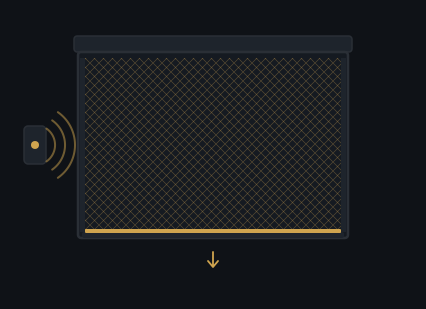
The difference from a motorised screen is not the motor. A threshold is set on temperature, humidity or air quality, and after that the screen runs itself.
02IT EARNS ITS PRICE IN A CHAIN
Climate comes on, windows close, screens come down. In one isolated room with no other automation you pay for sensors and use a remote.
03PRICE THE PROJECT AS A WHOLE
Five screens on a shared controller cost less per unit than one: the cost of the automation is spread across the job.
04WHAT TO DESIGN IN EARLY
- Low-voltage wiring — during the works, not after the finishes
- Backup power: a villa has more screens and they take longer to raise by hand
- A manual override on every screen, without exception
- Who holds the logic: an integrator or HomeKit
Who it suits
Suits you if
This is a system for a villa or a penthouse where the rest of the house already runs on scenes. The point appears when the screen becomes part of a chain: climate on, windows shut, screens down, nobody pressing anything. It is also chosen where quiet matters, because a 24 V motor is far less audible than a 230 V tubular drive.
Not for you if
There is no sense in it for one room on its own. You pay for sensors and integration and end up using it like a remote, and a motorised screen does the same thing for less. It also does not suit a place where cabling cannot be run: automation needs both power and a data path, and there is no battery version here that will last a season.
How it works
The difference from a motorised screen is not the motor but who makes the decision. On a motorised screen a person decides with a remote. Here the system decides from sensor data: outside temperature, humidity, air quality.
A DC motor at 24 V runs more smoothly and more quietly than a tubular one, which is why it goes into bedrooms and anywhere the screen moves at night. The controller talks to your home ecosystem, so the screen appears in the app as an ordinary device and can be put into a scene alongside blinds and climate.
Battery backup and a manual override on each screen are ordered separately. The second matters more than it sounds: if the controller hangs and the screen has to come up now, the override is the only way to do it without an electrician.
Fitting takes two days and includes running low-voltage cable. That is why automation makes sense to plan during a renovation rather than after one.
Choose your mesh
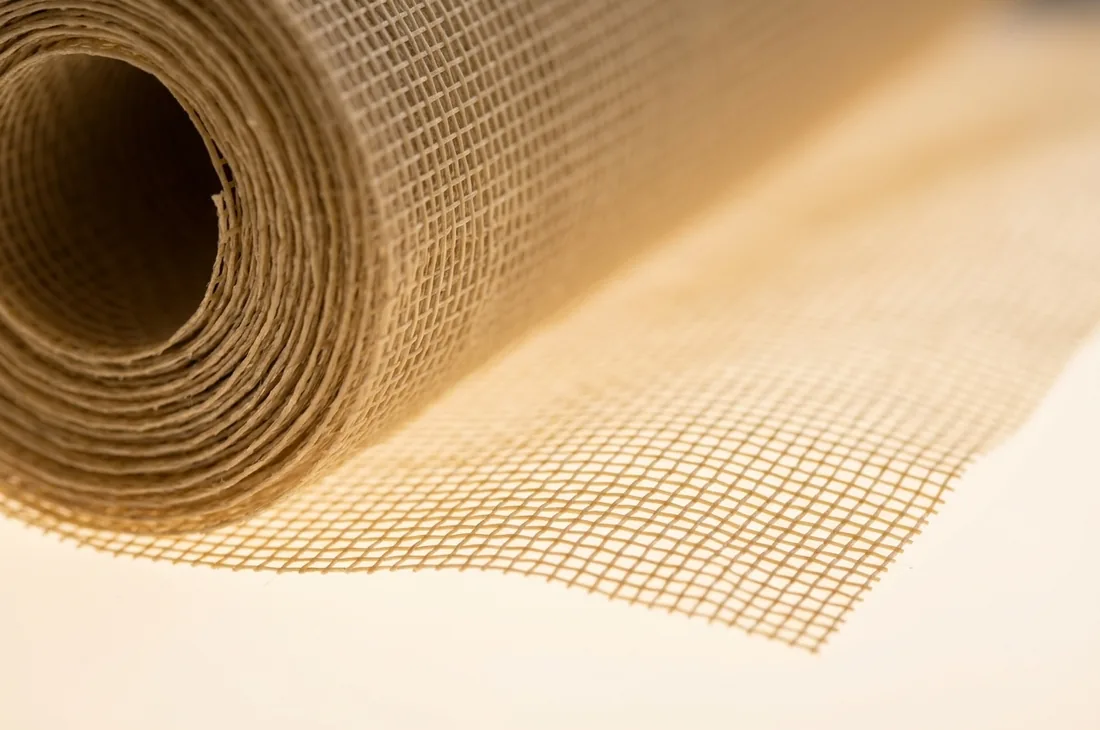 Standard Mesh for Mosquito Netsaperture 1.2 × 1.2 mm · from 200 AED
 Anti-Sand & Dust Mesh in Dubaiaperture 1.0 × 0.8 mm · from 250 AED
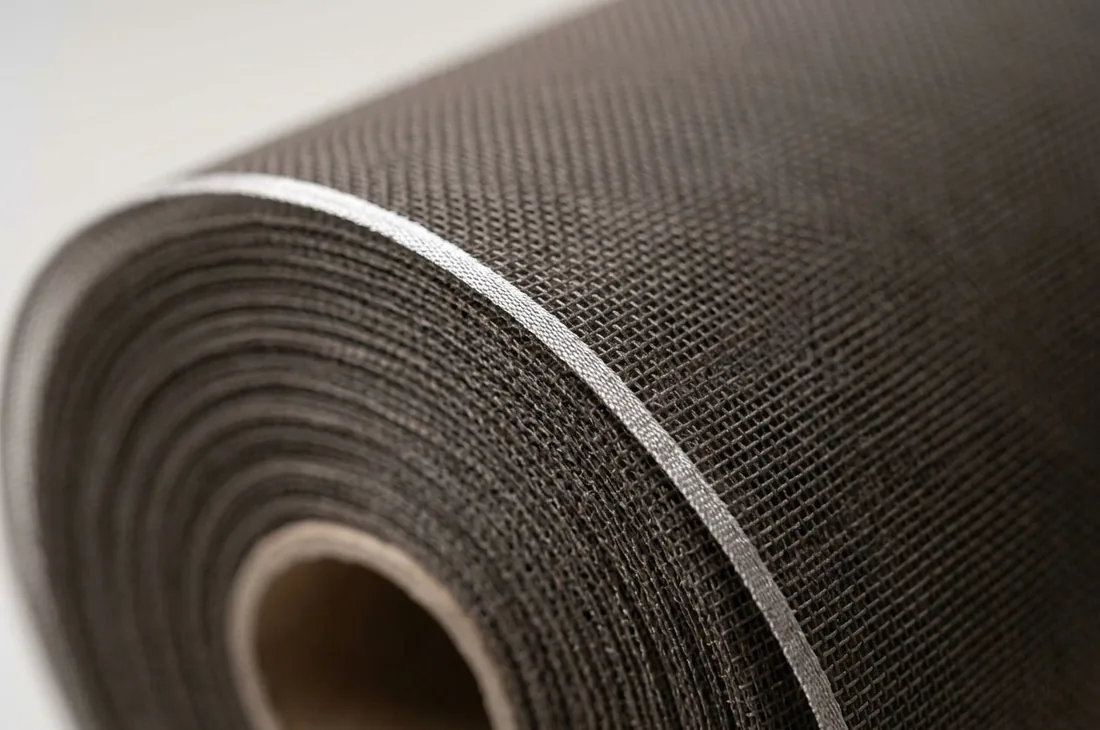 Pollen Filter Mesh for Allergyaperture 1.2 × 0.2 mm · from 300 AED
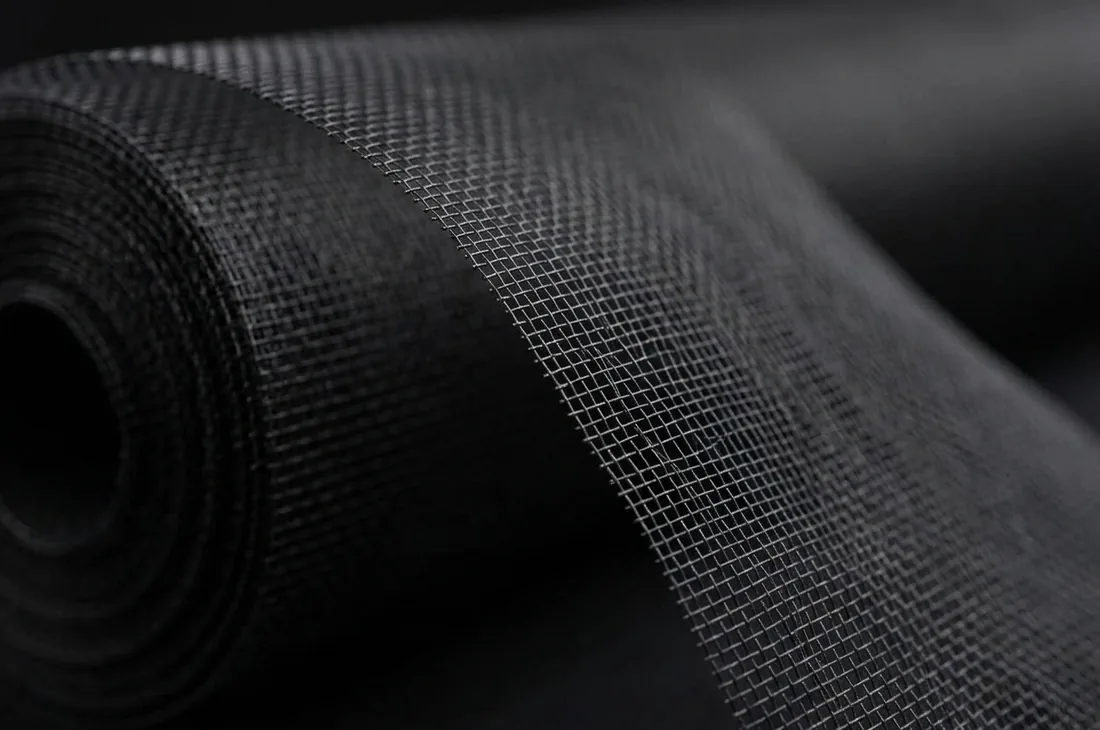 UltraView Mesh — Maximum Visibility100% light transmission · from 250 AED
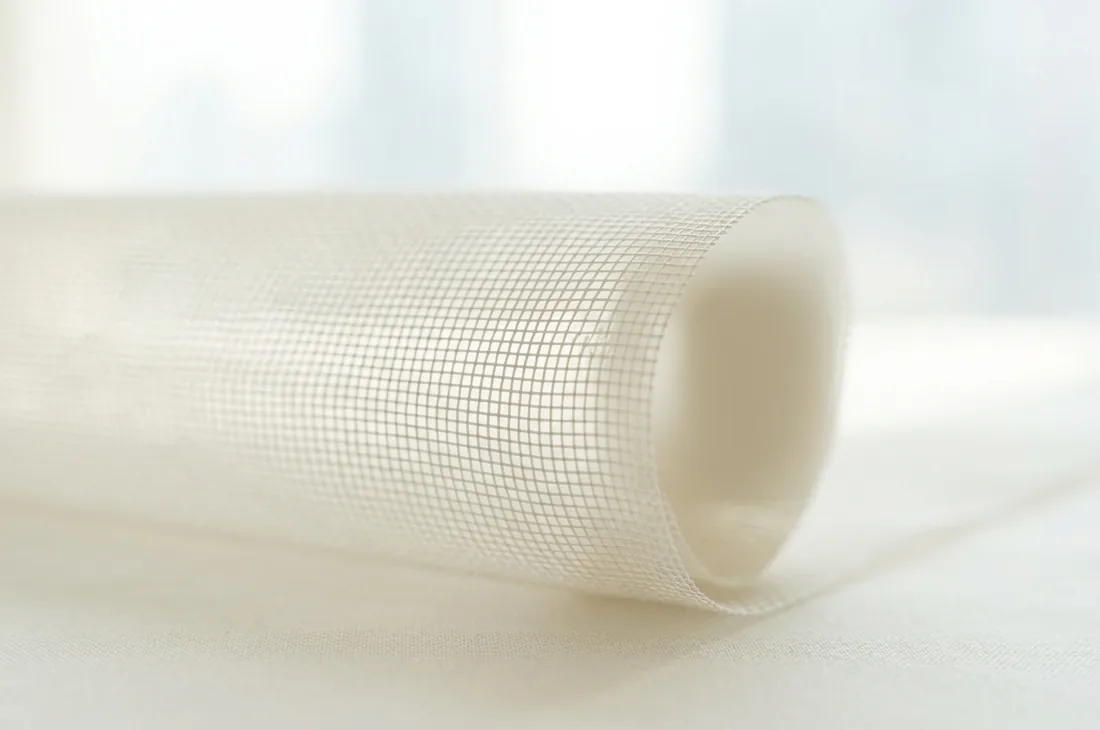 Bird-Proof Mesh in Dubaireinforced thread · from 250 AED
What it costs
An automatic screen costs more than a motorised one by the price of the sensors, the controller and the cabling work. The base is calculated the same way, from area at 320 AED per square metre, with automation added on top. We do not quote a total over the phone: the figure depends on which ecosystem you already run and how many screens go onto one system. Five screens on a shared controller work out noticeably cheaper per unit than one.
By opening type
Automation earns its price tied into the logic of the house, not on its own: otherwise it is the same motor with a more expensive button.
Common questions
Which smart home systems does it work with?
HomeKit, Google Home and Alexa. If the house runs on KNX the screens go in there too, but that is a task for your integrator and it is agreed before fitting.
What triggers it?
The threshold is configurable: temperature, humidity or air quality. Most people use temperature, because it coincides with the moment the air conditioning starts.
What if the internet drops?
Local scenes keep running, because the controller makes the decision rather than the cloud. What you lose is app control from outside the house.
Can I close it by hand?
Yes, if the manual override was ordered. We recommend it on every screen: it is cheap insurance for the day the automation stops and the window has to shut now.
Why is it quieter than motorised?
The motor. A 24 V drive runs more softly and without the hum of a 230 V tubular unit.
[ FROM SURVEY TO FITTING ]
GET AN INSTANT QUOTE
 FROM SURVEY TO FITTING
How we work
-
Request
You send a request here or on WhatsApp and we confirm the details in five minutes.
Free
-
Survey
Our surveyor comes out free of charge and takes exact measurements of the openings.
Same day
-
Manufacturing
We build the screens to your sizes in our own workshop in 24 to 48 hours.
Quality materials
-
Fitting
We install and adjust the system, and it is ready to use the moment we leave.
Careful work, no rush
CUSTOMER REVIEWS
Proof, not promises
-
 Google
 5.0
5.0
-
Our building maintenance was taking too long, so I contacted them directly. They asked for photos on WhatsApp, sent a quotation and arranged a date. Two installers arrived exactly on time, used shoe covers and finished three windows and a balcony door before lunch. They even adjusted a loose window handle without charging extra.
Rated 5 out of 5
-
My cat has always been a nightmare for scratching nets — she destroyed the last ones I had. They recommended a heavy-duty scratch-resistant mesh and it is brilliant. She has tried her hardest to claw through it and hasn't managed once. Much stronger than the regular stuff, but still clear enough.
Rated 5 out of 5
-
I have really big windows, so I thought screens would be a hassle. They came, measured up and made custom frames that fit exactly. No gaps anywhere. It has been months and nothing has moved or sagged.
Rated 5 out of 5
-
My apartment is right next to a garden, so the bugs have always been relentless. They fitted fibre mesh on everything and it has been a game changer — it keeps out even the smallest midges that used to drive me crazy. Less sand gets in on windy days too.
Rated 5 out of 5
-
I have a lot of plants at home, so I was worried the screens would block too much light. They recommended a very thin, almost invisible mesh. Plenty of light still comes through, and there are no more small insects around my plants.
Rated 5 out of 5
-
After waking up with mosquito bites several times, I decided to install screens. They fitted magnetic screens on two bedroom windows — quick and clean. The magnets close properly and keep insects out, and the mesh quality is much better than the cheap ones I had before.
Rated 5 out of 5
Mosquito nets
that actually work
- 12 years in Dubai
- 2-year warranty
Leave a request and we will check the sizes, the type of opening and put together a tidy solution for your windows, doors or balcony